
Do I Need a Yacht Management Software?
Managing a modern expedition yacht eventually outgrew my memory, spreadsheets, and homemade databases. Looking at yacht management software through the eyes of a former LIMS developer taught me that the real challenge isn’t software—it’s deciding how you want to run your boat.

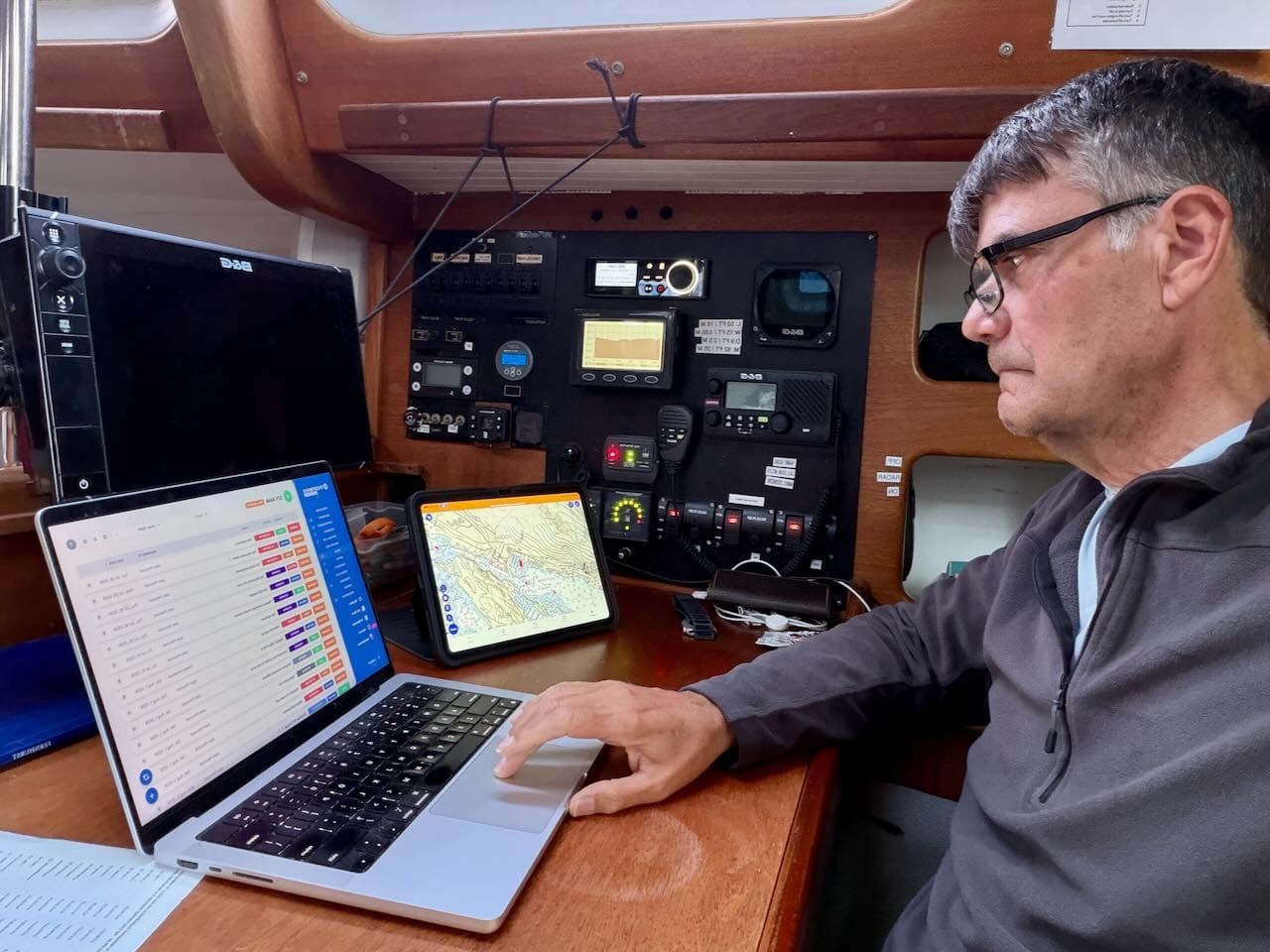
I tried everything to keep track of Adak’s operations: paper notebooks, Post-it notes, Excel spreadsheets, my favorite task management software. I even spent more hours than I care to admit developing a custom database application. The prospect of finally having the boat’s data under control was exciting until I realized that I had not purchased a sailboat to become a software developer.
So I hit the brakes and paused.
This was not working.
But surely I was not the first person trying to manage a complex yacht without losing his sanity. Someone had to be selling a software tool to help me do what my ad hoc solutions could not.
A few hours with various search tools introduced me to a category of applications called yacht management software. A mobile app, a web interface, a custom database—that was all I needed to keep track of my to-do list, documents, inventory, and the handful of datasets that keep a boat running smoothly.
As soon as I signed up for the first trial, the concept felt extremely familiar.
Not the boat parts—the shape of the thing.
An inventory of equipment. Service intervals counting down against engine hours and calendar dates. Spare parts with quantities and locations. Documents attached to assets. A place to record that a task had been done, by whom, and when.
I had built this before.
In another life I designed and sold Laboratory Information Management Systems—LIMS—and here it was again. I could not resist calling it a Boat Information Management System. BIMS sounds better than YIMS.
That recognition is worth pausing on because it tells you what this software actually is before any vendor gets to tell you.
Strip away the marine vocabulary and a yacht management platform is simpler version of enterprise software applications that many types of businesses like retail, manufacturing, or laboratories. The problems it solves are not new, and neither are the solutions. I find this reassuring. It means the hard questions have been asked and answered elsewhere by people who had decades—and budgets—to get them wrong first. It also means the failure modes are known, and they are probably not the ones the brochures discuss.
So this is not a review.
I am not going to tell you which app has the best features because I don't know that yet. I want to answer a simpler question, the one I had to answer for my own lab, then for my customers’ laboratories, and today for my boat:
When does a system like this actually earn its place, and what does it really cost—not in licensing fees, but in the thing the invoice never mentions?
Start with the cost, because it is where most of the honesty lives.
The license is the small number.
The real cost is configuration: loading your equipment, your maintenance schedule, your spare parts, your documents. Then—and this is the part that takes months, not weeks—getting yourself to actually use it.
I learned this the expensive way with laboratory software, watching organizations buy a system, populate it, and quietly abandon it within a few months.
The database was never the value.
The value is the data that the software helps you capture.
But not all data are created equal.
A detailed inventory of nuts, bolts, and washers is not particularly useful because we can reasonably assume there are enough of them. Keeping track of when the oil was changed and how much has been added since the last change is useful because it helps manage the engine.
Most people have very little patience for collecting useless data.
They happily make time to record information that will make tomorrow easier than today.
The difference between a useful and a useless data point is… usage.
And using data requires a process.
Changing the oil every 250 hours or every 12 months, whichever comes first, is a process.
Any management software can only help execute a process. They don't make the process.
This sounds obvious written down, yet I think it is the single most misunderstood fact in the entire category.
People buy management software hoping the tool will solve all their management problems—the way they might buy a gym membership hoping the membership will make them fit.
It doesn’t work that way.
The membership is valuable because it gives access to weights and treadmills. But between the membership and physical fitness sits something much more important: a training plan.
Between a yacht management software subscription and a smooth sail are processes the software cannot provide because they are specific to the boat and to the organization supporting it.
The processes of a charter company operating a fleet of twenty identical boats are not the same as the processes we use aboard Adak. And the way we operate Adak would probably not work aboard a much larger vessel with a larger crew.
When thinking about the underlying processes, I see three different situations.
The first is owners who have no processes and are not willing to invest much effort in developing them. It is like getting a gym membership without any intention of exercising. The software has very little value to offer these users.
The second is owners who have no processes but recognize the value of developing them. Just as someone who is out of shape might begin training with a few simple exercises, these users can start with one module—perhaps engine maintenance—and gradually expand into the rest of the system.
The third is owners who already have established processes and simply need software to help execute them. Here the question becomes one of fit. In some cases, small adjustments to language and workflow are enough. In others, there may be a significant gap between the way the software expects people to work and the way the organization actually operates. Commercial operators with regulatory requirements, for example, may quickly discover that software designed for private owners does not support what they need.
There is another category of boat owners worth mentioning: those who simply do not need management software.
How do you know when you do?
There is no rule.
There simply comes a moment when you know there has to be a better way.
I experienced that feeling repeatedly after purchasing Adak four months ago.
I struggled to keep track of the surveyor’s recommendations. I had to look up the make and model of my engine multiple times. I got tired of digging user manuals out of the manual box. I bought two PFDs I did not need because I did not know how many we already had aboard. I found myself wanting a checklist for starting and shutting down the engine after doing it less than gracefully a couple of times. I needed a simple way to share the boat’s Wi-Fi password with the crew.
You get the idea.
There comes a point where it no longer all fits in your head.
There comes a point where you need to pause and think about the proper way of doing things.
There comes a point where you start wanting to communicate those ways of doing things to your crew and your guests.
That point has surprisingly little to do with the size of the boat.
It has much more to do with its complexity, the way it is used, and the consequences of making mistakes.
I once owned a 30-foot sailboat. It was simple. It was just fun on Sunday afternoons. I do not think I even had a to-do list for it.
The need for yacht management software is a little like reefing.
If you are thinking about it, you have probably already reached the point where you should have done something about it a little while ago.
Adopting the software will be a journey. It will probably give you an opportunity to rethink how you want to operate your boat. Every aspect of your operation that you successfully capture in software creates a little more room for the parts of boat ownership you actually enjoy. It is likely to save money by avoiding duplicate purchases or costly equipment failures. And if you are fortunate enough to share the boat with a crew—whether two people or ten—shared information becomes shared ownership. People begin to take pride in the way the boat is run.
This is the view from the LIMS world, looking at a market I have only recently started sailing in. I would genuinely like to hear from people who have managed boats far longer than I have. Where does this perspective hold? Where does it break down?
Related Posts
 Jean Peccoud
 Jean Peccoud