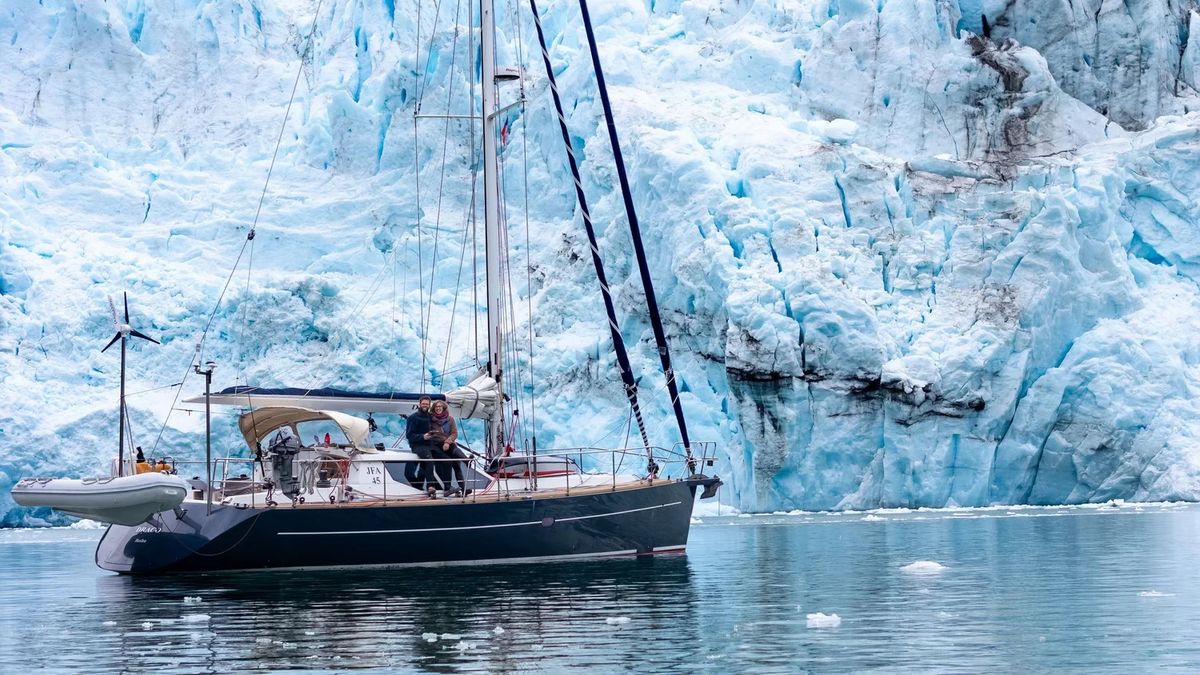
What is a skipper?
What separates a skipper from a captain, an owner, or the crew? The one who holds final responsibility for the boat — and decides to take it on.

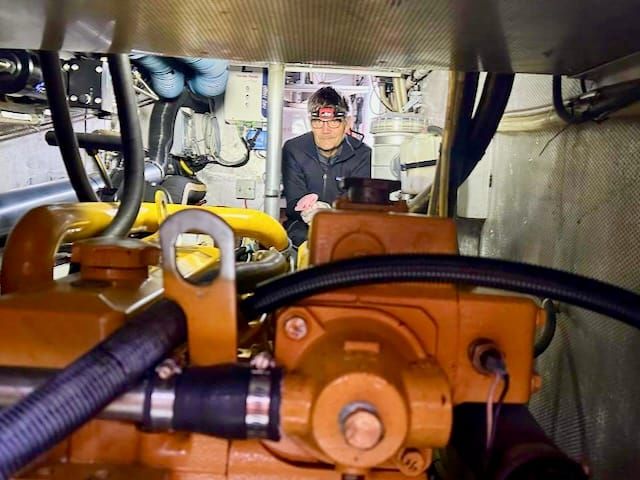
After sailing more than 6,000 miles from New Zealand to Alaska as crew aboard Adak, I have been wondering what it would take to become its skipper. I first had to answer a simpler question: what is a skipper?
A skipper is the person responsible for the safe operation of a vessel and everyone aboard. That responsibility includes navigation, weather decisions, seamanship, risk management, and ultimately deciding whether to leave the dock, continue, or seek refuge to wait out the weather.
What Does a Skipper Do?
On a recreational sailboat, the skipper may be a jack of all trades — steering, trimming sails, dropping the anchor, cooking, and repairing equipment. None of those tasks, however, define the role. What makes someone the skipper is that the final decisions, and their consequences, rest with them.
In practice, a skipper's core responsibilities include:
- Navigation — planning and executing a safe passage.
- Weather — reading the forecast and deciding when to sail, shelter, or divert.
- Safety — protecting the crew, the vessel, and everyone aboard.
- Seamanship and risk management — handling the boat and anticipating what could go wrong.
- Command — making the final call, and owning the outcome.
Skipper vs. Captain
People often use captain and skipper interchangeably, but they carry different connotations.
Captain is a formal title. Commercial vessels have captains. Naval ships have captains. The title implies a professional role within an established chain of command. In the navy or the merchant marine, captain refers to the commanding officer.
Skipper is more informal — the language of sailing clubs, racing fleets, cruising sailors, and other private boats. A skipper may hold professional licenses, or none at all. The term is generally used in the context of smaller boats; the skipper of a yacht over 100 feet may prefer to be called captain. Like skipper, captain emphasizes responsibility rather than formal rank.
Skipper vs. Master
This distinction is less familiar but perhaps more important.
Master is a legal term. In documents like insurance policies or customs clearance forms, the person in charge of a boat is generally referred to as master — a designation of responsibility, irrespective of the boat's size or context.
Yachtmaster is different from the master of a vessel. It corresponds to a level of qualification, mostly used by the Royal Yachting Association in the UK, and is often required to become professional crew. Someone may hold an RYA Yachtmaster license without holding the master's responsibility for a given boat. And the master of a boat may instead hold another form of professional qualification, like a US Coast Guard Captain's license.
Skipper vs. Owner
Owning a boat does not automatically make someone its skipper.
Many owners hire professional skippers to deliver boats, run charters, conduct expeditions, or manage a cruise the owner is either not qualified for or not interested in running themselves. Likewise, many skippers spend their careers commanding vessels they do not own.
Ownership and skippering involve different kinds of responsibility. The owner is fiscally responsible for the boat — insuring it, registering it, paying relevant taxes and bills. The skipper is responsible for the decisions made while the boat is underway.
Sometimes those are the same person. But above a certain level of complexity, it's common to have a professional skipper distinct from the owner, and possibly a boat manager handling things on the owner's behalf — a shore-based role, quite different from the skipper's operational responsibility.
Skipper vs. Crew
This is the distinction that interests me most.
Crew members make many important decisions every day. They stand watch, trim sails, decide to reef, change heading, start the engine or the generator. They repair equipment, keep the logbook, navigate to keep the boat moving safely.
The skipper often performs many of the same tasks. The difference is not technical ability. The difference is responsibility.
Whatever the crew decides, they decide by delegation. The skipper delegates part of their authority to the crew, and different crew may hold different levels of it — most likely, all of it limited. A crew member may be trusted to navigate to a destination, but would not have the authority to change that destination without the skipper's approval.
When weather deteriorates, someone has to decide whether to continue or seek shelter. When the engine develops an unfamiliar sound, someone has to decide whether it's safe to keep going. When a crew member becomes exhausted or injured, someone must adapt the voyage accordingly. These are decisions typically made by the skipper.
At some point, crew need to report a change of circumstance to the skipper. They may share their perspective, suggest a course of action. But ultimately, the skipper is responsible for all decisions made — by themselves or by their crew — that affect the vessel's safety.
How to become a skipper?
People become skippers the day they decide to take command of a boat. It usually starts very organically — on a paddle board or a kayak, a small dinghy like a Laser or a Hobie Cat, a small cruiser. Experience accumulates, confidence builds, and it becomes possible to move up to bigger boats.
Unlike powerboats, which require a specific license in many countries, most countries have no licensing requirement for taking command of a sailboat. People become skippers when they decide to take on the responsibility — not when they get their "sailing permit."
I had skippered boats before. For a few years I owned a 30-foot sailboat. I also skippered bareboat charters around 40 feet.
But when I bought Adak, I knew I could not skipper her. She was much larger than anything I had sailed before, and size matters, a lot, in sailing. She was also far more complex than anything I'd handled — and to take command of a boat, you need to understand her systems. Finally, I needed to cross the Pacific to bring her back to North America, and I had no relevant experience. I had never sailed offshore before starting this trip. So, as owner, I relied on a professional skipper to manage the passage.
But now we're in Alaska. I'm far more familiar with Adak's systems. I've sailed her 6,000 miles. I understand how she behaves in the wind. Most of what we'll do over the next couple of months is coastal sailing, with some offshore passages between 200 and 1,000 miles — much shorter than what we've just crossed.
So now may be a good time to become the skipper of this boat. But it isn't easy. I enjoyed being crew. I did what needed doing, but for the most part I could rely on my skipper for the important decisions. I could use my lack of experience as an excuse for not deciding, not taking responsibility. I could hide behind my lack of self-confidence to avoid stressful maneuvers like docking. I just had to tag along, do what I could, without pushing myself too hard.
But at some point I will need to take on this responsibility. And objectively, now may be the time. Now it's my role to read the weather, plan departure, decide when to get fuel, where we'll spend the night, when to hoist the sails — and many other things. And if something goes wrong, I will only have myself to blame.
This transition is intimidating. It reminds me of my first solo flight. When a student pilot flies solo, they are pilot in command, even without a license yet. Lined up at the end of the runway, before pushing the throttle to full power, they have to commit to landing the plane safely, no matter what happens in the air.
As we prepare to leave tomorrow to explore remote anchorages around Unalaska, I am making that same commitment — to bring this boat back to a safe harbor, the way I committed to land the plane every time I took off.
Tomorrow nothing visible will change. Adak will be the same boat. The weather will be whatever the forecast tells us. The charts will show us the way like they did when we got her. The only difference is that the responsibility for every decision will finally be mine.
That’s how people become skippers.
A track to close this one out: "Growing Pressure" by Gabriel Saban.
Related Posts
 Jean Peccoud
 Jean Peccoud
 Jean Peccoud