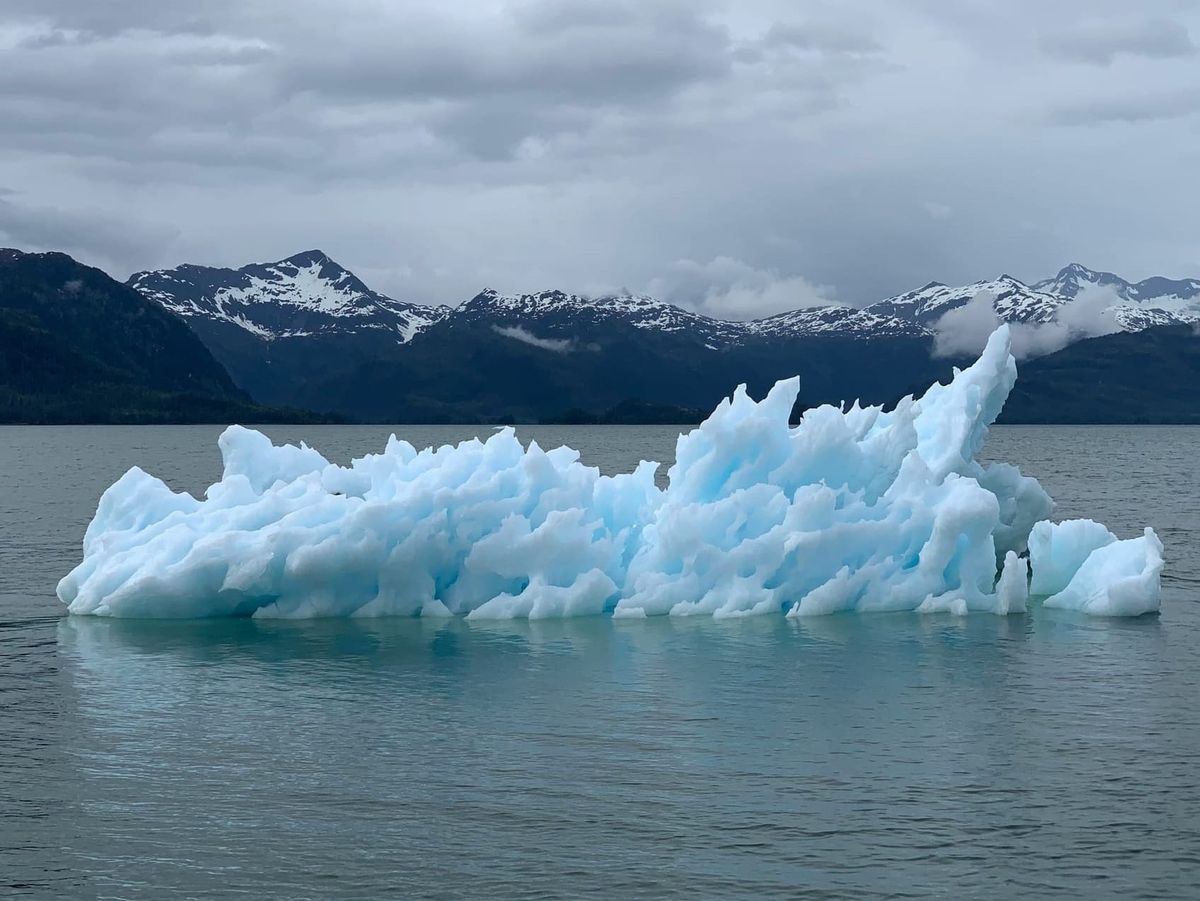
Thrown in Jail
Sailing across the South Pacific sounds like living your best life. Five days in, the season is already contracting, the invitations have been withdrawn, and the to-do list is out of control.

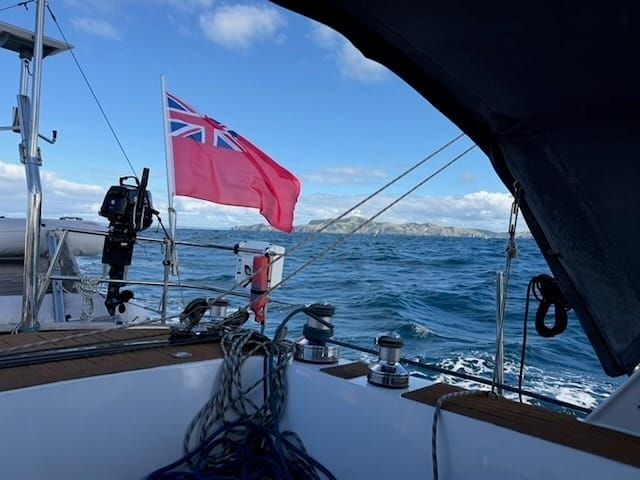
Sailing across the South Pacific sounds like living your best life.
It feels like I have been thrown in jail.
We left Opua on May 14th and arrived in Nouméa, New Caledonia, on the 19th. After only a few days ashore, we cast off again this afternoon for Majuro in the Marshall Islands.
Since leaving New Zealand, I have been struggling to keep up with email. My to-do list is out of control. I have barely written anything in more than a week. The next YouTube video is still raw footage. I have been mostly absent from social media.
The season is already changing shape.
CBP denied our request to enter the United States at Attu Island, so we will have to clear in farther east. After the first offshore passage, I also realized I may not yet be ready to move this boat from Alaska to British Columbia late in the fall. That means the season will likely end earlier than planned, and the delivery to North America now has to take priority before the weather closes in.
Most painfully, I have had to withdraw invitations I had extended to people I was counting on for intellectual companionship. I had hoped the boat could become a kind of floating seminar — a place to think together about how we learn to live with climate uncertainty. Pulling back those invitations felt, briefly, like watching the project contract before it had even properly begun.
People encourage me to go with the flow. Follow the wind. Stay longer in beautiful places. Make shorter passages. Figure things out as I move along.
This is how much of the sailing world operates, and it works beautifully when sailing itself is the point.
“Sailing Fiji” is not really a deliverable. Nothing has to happen by a specific date. The weather decides.
I am not on vacation. I have six films to shoot, a company to build, and a boat to bring back to France in 2027.
“Going where the wind takes us” sounds romantic until I remember why I set sail: for my children, my students, and for people trying to navigate uncertainty in their own lives.
I hope that some of the lessons learned at sea may help them do that.
Somewhere during a night watch between Opua and Nouméa, I thought about people whose lives become suddenly constrained while responsibility continues anyway. People in pretrial detention trying to prepare their defense from inside a hostile system. People rebuilding after hurricanes while insurance paperwork, jobs, children, and deadlines continue to exist. People who lose stability without losing obligations.
Obviously, I am not in jail. I chose this.
But the question underneath feels increasingly important: how do you continue to carry responsibility when your environment becomes so unstable, uncertain, and restrictive that it erodes agency?
That is the condition I am voluntarily stepping into aboard this boat.
And increasingly, it feels like a preview of the kind of reality climate disruption may impose on many people who never chose it at all.
That realization changed the meaning of the first weeks at sea. Not because it made things easier, but because it made them more legible.
The boat is not a retreat from difficulty. It is a controlled exposure to it.
The season is shorter than planned. Some companions will not come aboard. The editorial output will probably be thinner than I hoped. None of that feels good to admit.
But the experiment is running.
And during night watches, one question still keeps surfacing:
What made you think this was a good idea?
Isn’t writing hard enough from the comfort of your home? Didn’t you already learn from previous companies how difficult it is to build traction? Why would you try to create something from a place where staying alive cannot entirely be taken for granted?
I still do not have a good answer.
Maybe that is the point.
Related Posts
 Jean Peccoud
 Jean Peccoud