
Ethics at the Edge of Uncertainty
When the Pope and an AI company stand together to address the ethical risks of artificial intelligence, something has shifted. Irreducible uncertainty transforms technical problems into ethical questions — and ethical questions, ultimately, are personal ones.

Earlier this week, Pope Leo XIV released his first encyclical, Magnifica Humanitas, focused on artificial intelligence and human dignity. What was perhaps even more remarkable than the publication itself was the participation of Anthropic cofounder Chris Olah in the launch event.
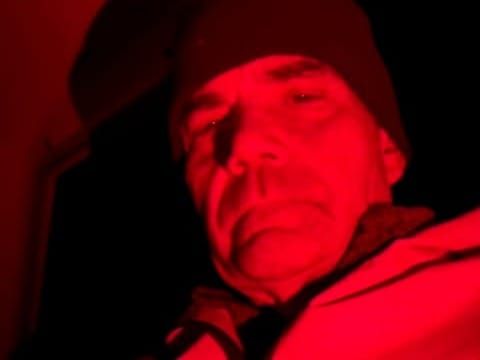
While sailing between New Zealand and Alaska, I could not refrain from wondering: Why would the Pope invite a corporate partner to participate in such a moment? And why would an AI leader associate itself with an event explicitly concerned with the ethical and civilizational risks of the technology it is helping create?
At first, it felt almost like a questionable marketing exercise. But after thinking about it for a few days, I wonder if something much more significant may explain this remarkable moment.
Perhaps this was an acknowledgment that the people leading the development of AI increasingly recognize that technical capability alone cannot determine what should be built, how these systems should be deployed, or what kind of society they may ultimately produce.
Most companies operate within relatively stable frameworks. They identify a market, develop products to fill a recognizable need, and use management techniques to optimize adoption and profitability.
Artificial intelligence feels different.
The capabilities are evolving faster than the frameworks required to govern them. The consequences remain deeply uncertain. The market itself is still being defined in real time.
This no longer feels like a business problem. It feels existential.
It takes an unusual degree of corporate courage to publicly acknowledge such uncertainty. Investors don't like uncertainty. Publicly admitting "we do not fully know" is not a natural posture for companies whose future depends on confidence and growth.
What makes AI different is not simply the scale of the opportunity, but the nature of the uncertainty itself.
Business management frameworks are designed primarily to deal with known risks. A company may not know how interest rates, energy prices, or consumer demand will evolve, but it can still model plausible scenarios and develop playbooks for responding to them.
AI increasingly appears to belong to a different category.
The uncertainty is not limited to which outcomes will occur. We do not yet fully understand the space of possible outcomes itself. The capabilities are emergent. The social consequences remain difficult to anticipate. The system is evolving faster than our ability to fully understand its implications.
Under those conditions, optimization alone becomes insufficient.
Irreducible uncertainty transforms what initially appears to be a technical or business problem into an ethical question.
It increasingly feels like a problem of navigation: how to steer the development and adoption of a powerful new class of tools so they remain aligned with the civilization that created them. Navigation, ultimately, is a personal act — one that falls to each of us, not only to popes or corporate founders.
I used multiple AI tools to help write this post using a process similar to the collaborative authorship common in academic papers except that in this case my co-authors do not claim credit. The circular experiment of using AI to reflect on AI ethics is, I think, not just legitimate — it may be necessary. In doing so, I took an individual ethical stance, that is mine alone to hold.
The encyclical provides a framework to help individuals make their own ethical decisions. It reminds us of the dignity of work, the value of human imperfections, and the moral responsibility associated with warfare. Above all, it argues for restraint — a recognition that maximizing the capabilities and profitability of AI systems cannot, by itself, serve as a sufficient compass for their development.
Under conditions of irreducible uncertainty, the relentless optimization of capability and profit begins to feel less like a business strategy and more like a civilizational gamble.
I have been living with this question for longer than the current AI moment might suggest. Climate change is where I first felt this tension personally.
Over the past decade, I increasingly met students who seemed to arrive at universities already carrying the psychological burden of trying to imagine how to live in a world shaped by climate change. Many wanted to work on climate solutions. Others seemed deeply disillusioned with conventional career paths, struggling to find opportunities they considered meaningful or ethically coherent.
My generation still has the luxury of seeing recent climate disruptions as deviations from a relatively stable world we remember. Younger generations often lack memory of that reassuring baseline. They are entering adulthood confronting a climate that already feels unstable and increasingly difficult to predict. Many do not seem to find much reassurance in climate model projections or existing policy frameworks.
I increasingly felt I had surprisingly little to offer them.
I could teach models, technical skills, optimization frameworks, and specialized knowledge that might lead to good career opportunities. Those things remain essential. But when students tell us they do not particularly care about maximizing first employment salary, they may be signaling that we are missing a much larger question.
I had been formed in a tradition — Jesuit education — that took this question seriously. At its best, it was less concerned with transmitting knowledge than with forming judgment: the capacity to reason through genuine uncertainty, weigh competing values, and take responsibility for decisions whose outcomes cannot be guaranteed. That kind of formation is slow, uncomfortable, and difficult to assess.
What I too often observed in higher education was something different. We were training students more than educating them. The distinction matters. Training fills a defined need. Education forms a person. When institutions begin adopting the logic of markets and customer satisfaction, students become customers, grades become difficult to separate from retention incentives, and education increasingly becomes a product. As faculty, we talked about enrollment, research funding, rankings, and workforce preparation. We spent little time thinking of what kind of human beings we were actually trying to help form.
Ethical training certainly existed, but it often felt closer to the transmission of approved frameworks and acceptable positions than to the cultivation of judgment under genuine uncertainty. We did relatively little to develop students' capacity to confront tradeoffs, tolerate ambiguity, reason through incomplete information, and take responsibility for decisions whose outcomes cannot be guaranteed.
I wondered, with increasing unease, whether our institutions were preparing students for a world in which certainty itself can no longer be reliably restored.
Climate change is only one manifestation of a much broader condition. Over the last century, we have come to see progress as the reduction of uncertainties that shaped the lives of our ancestors. And yet, political fragmentation, institutional distrust, technological acceleration, and artificial intelligence are all contributing to shaping the impression that the world is becoming less predictable, leaving individuals to navigate that uncertainty on their own terms.
Reaching an age where health uncertainty can no longer be ignored, I increasingly felt the need to understand what it actually means to live with uncertainty rather than simply trying to manage it intellectually.
Ice Frontiers emerged from that question.
It began with leaving the reassuring stability of a tenured faculty position. I am now learning to sail a large expedition sailboat across oceans and through difficult waters with the hope of observing some of the effects of climate change firsthand. Along the way, I am trying to document the reflections that emerge from this controlled exposure to uncertainty.
I do not expect offshore sailing to provide answers to problems as complex as climate change, technological disruption, or institutional fragility. But I hope the experience may help me better understand how I can continue to make decisions and carry responsibility when certainty can no longer be fully restored.
And perhaps a field note written during a night watch may help others confront some of their own uncertainties as well.
Related Posts
 Grant McNamara
 Jean Peccoud
 Jean Peccoud