
Running Home
In Yakutat, refueling was the easiest it had been since New Caledonia. Insert a card, fill the tanks, leave. It should have been a relief. Instead it felt like something ending — and the ending had started long before the dock, and it had started in me.

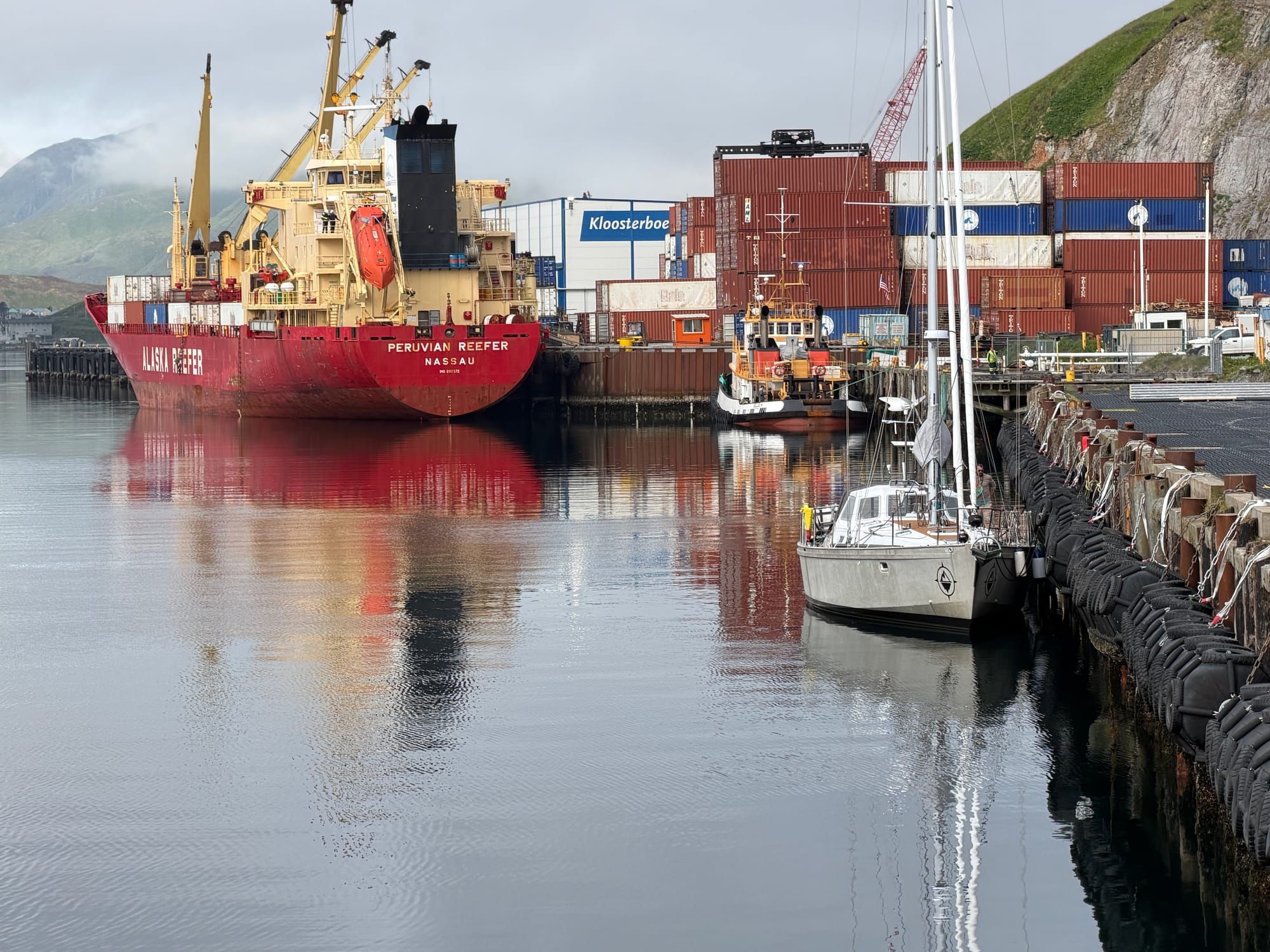
In Yakutat, there was a self-service fuel dock.
We pulled alongside, inserted a credit card, filled the tanks, and left. It was the easiest bunkering we had done since New Caledonia.
And somehow, it felt like a disappointment.
The last child born in Yakutat is now an adult. The town sits between mountains, glaciers, and the Gulf of Alaska, reachable mostly by air. No roads lead out. A few miles away, the Hubbard Glacier pours off the mountains and has dammed Russell Fjord.
But the fuel dock kept bothering me.
For months, almost everything had asked something of us. Fuel had to be found. Weather had to be waited out. Distance meant weeks. Supplies could not be taken for granted. Reaching anywhere felt improbable.
At the dock in Yakutat, I understood that something had changed.
And it had not changed in Yakutat. It had started earlier, and it had started in me.
Dutch Harbor had felt like the edge of something we could only skim. We got a taste of it, but neither the boat nor the crew could go west. So we headed east toward Kodiak, then Seward, then Cordova — all remote by any reasonable measure, all extraordinary. But they were arriving closer, too fast. Now distances were calculated in days, not weeks. There was always another harbor within reach. Another airport, another place to buy fuel, another hardware store.
I told myself that was the change. The map filling in. Convenience returning.
But inconvenience is not what I had lost.