
Sailing Focused
'The only thing I regret about sailing is not stopping in more places,' someone told me while I was planning the passage to Alaska.

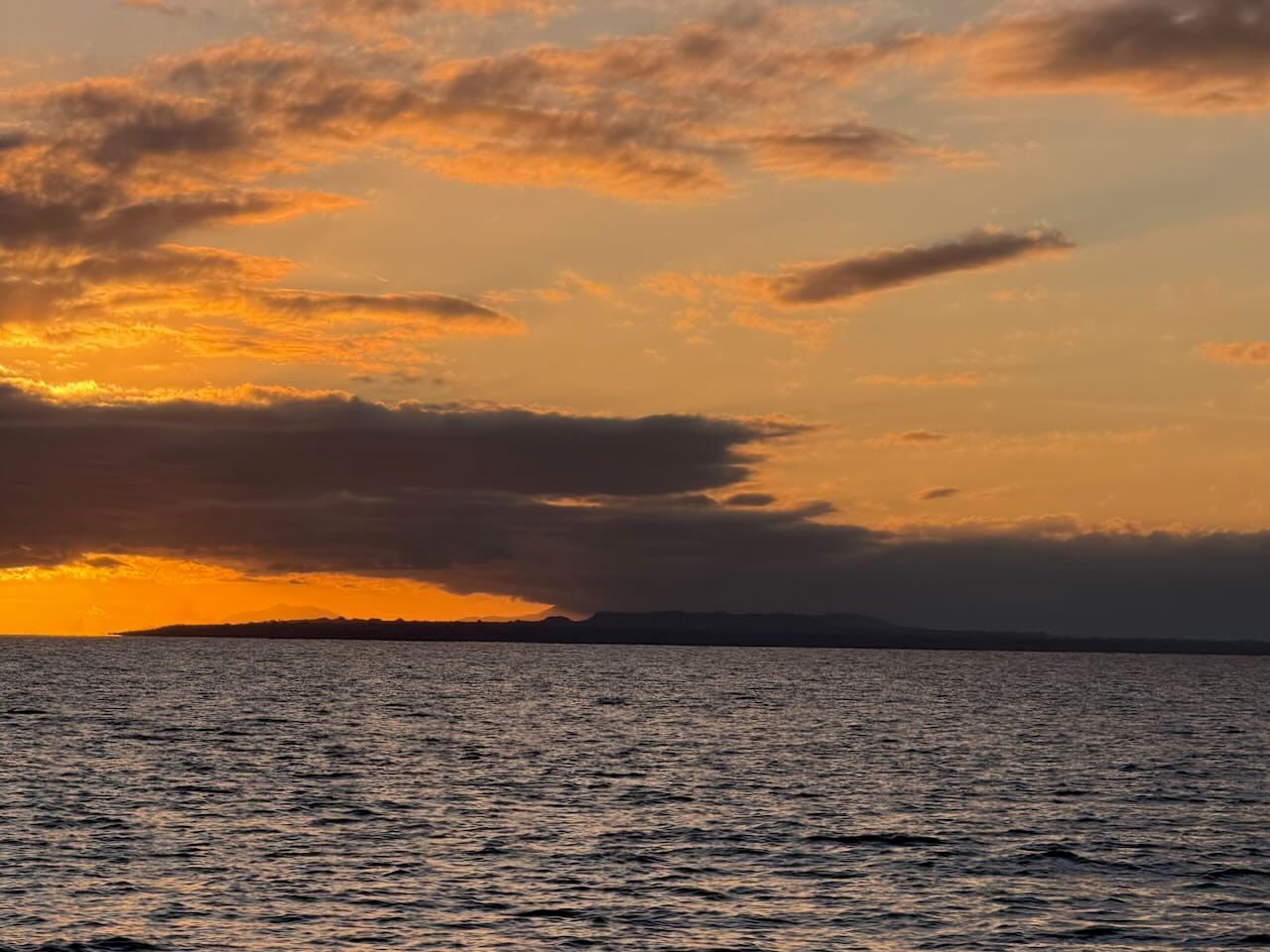
"The only thing I regret about sailing is not stopping in more places," someone told me when I was planning the transpacific passage from New Zealand to Alaska.
The comment stuck. Opua is a launching pad for crossing the Pacific. During the refit, I asked a lot of people there where they were going. What surprised me was how many didn't really know — not where, not when. Many sat in that posture for months, at the edge of a departure that never materialized. Others could think only of the next leg, waiting a very long time for the perfect weather window, because they had nowhere in particular to be.
Since then I've met a lot of people in the sailing community — some on small boats and shoestring budgets, some on comfortable ones, some crewing for superyacht owners. The common thread across the whole fleet seems that most people don't really have a plan.
Yesterday we talked on the boat about the distance from Nanaimo to Friday Harbor. To some it sounded like a long passage. To others, a day sail. It's fifty miles. The difference had nothing to do with the boats and everything to do with how many stops people imagined between the two points.
When I planned the transpacific, I kept the stops to the minimum the boat's safety required. First New Caledonia, a thousand miles out, to fix anything that needed fixing before the water got lonely. Then the Marshall Islands, for fuel. Then Dutch Harbor, a remote outpost of Alaska. Three legs, forty-five days.
We passed Vanuatu without setting foot ashore— including very close to Santo, where I once spent two years. We skirted countries we barely saw on the map. I really wished we'd had time for the Marshalls — they looked like exactly the kind of place you'd want to stay. Every stop we didn't make was the price we paid for getting closer to the one we needed to reach.
I had a project that involved high latitudes, and I found a boat for it. Adak is a 28-year-old aluminum cutter designed for ice navigation and cold weather and the kind of coast that punishes fiberglass and forgives almost nothing. And yet she spent most of her life in Europe, the Med, probably the Caribbean, then six years in the South Pacific. She made Greenland once, I think — one season out of twenty-eight.
Sailing her across the tropics felt absurd. A boat with two heating systems and no solar panel, in that heat. It was miserable. It was the wrong boat for the water. I couldn't wait to get her somewhere cold. The crew and the boat have both been happier since we reached the part of the world where the evening conversation is about which heating system to run — in August.
Here's the part I don't lead with at dockside gatherings.
I don't love living aboard. I think a boat is not a great home. It feels like living in my office, or in my lab. The bunk is a few feet from the work, the work is never finished, and you wake up every morning inside the exact thing you're responsible for maintaining. There's no door you close at the end of the day. The commute is zero because you never actually leave. And it takes a toll. It's isolating. It cuts me off from places and people I love.
Yes — I get access to places I could reach no other way. Anchorages with no road in. Mornings nobody sells tickets to. That's real, and it's most of why I'm here. But it isn't free, and the price isn't the money. The price is that my life shrinks to fit inside the volume of a 53-foot aluminum box.
Once you've said that plainly, the drift stops looking like freedom.
Because if the boat were pure bliss, drifting would make perfect sense. Go anywhere, it's all good, the sailing is the point and every mile is the payoff. But if the boat costs you something — if living aboard is a tax you pay in comfort and quiet and peace of mind — then wandering isn't liberty. It's paying full fare for a view. You bought yourself a hard life. The least you can do is spend it on something you actually wanted.
That's why I try to sail focused.
Not that it survives contact. I've learned that the best-laid plan doesn't outlast the next weather update, the unforeseen mechanical problem, or the unexpected pull of a place you didn't mean to care about. The plan bends. But the project underneath it holds, and not every destination serves it. So I try to be deliberate about where I stop. For now I'm still mostly moving the boat toward somewhere she can get the care she needs; the staying — living in a place long enough to understand it instead of passing through — comes later, in years when I'm less occupied with getting there.
This year that place was Alaska. It let me bring people aboard who could never have joined us in Vanuatu or the Marshalls. Navigating the cold water of Prince William Sound is the project itself.
Which brings me back to the man who regretted not stopping more. He wasn't wrong. I skipped the Marshalls, and I regret it — it's not a loss I've talked myself out of. The difference is only that I chose it. Those islands might have been wonderful. They just would have served a different project.