Witnessing Extinction
A midnight beach. Four hundred people watching a single turtle lay her eggs. In nature, those numbers should be reversed. What followed was worse.

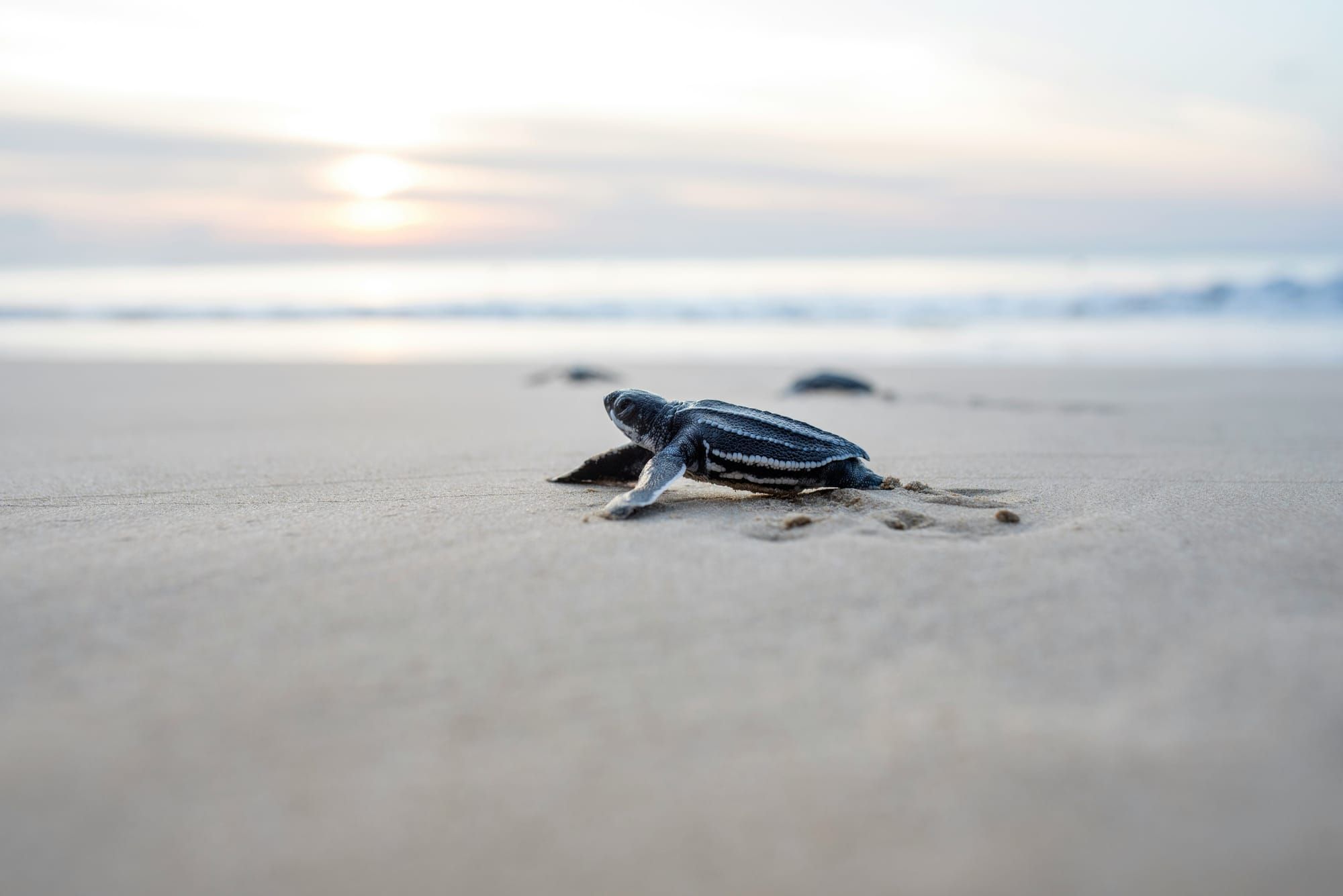
Yes, I advised world governments on science communication for 40 years. Yes, I have five degrees — communication, law, economics, environment law / international law, digital communications — plus a postgraduate in climate change science policy and negotiations. BUT it was a TURTLE that woke me to the climate crisis.
I was on a beach at midnight one Christmas holiday watching a turtle lay her eggs. Then I looked around — 400 people watching a single, solitary turtle. There is your problem. In nature, those numbers should be reversed.
It gets worse. I had witnessed the EXTINCTION of one breeding year of this turtle species. Some 80% of these turtle eggs hatched later in January — perfectly normal. But the Australian summer was not normal. Because the sand was so bloody hot, 80% of those hatchlings DIED on that superheated beach. That is NOT natural. Not normal.
It gets WORSE. The heat during incubation resulted in virtually 100% female hatchlings. That is definitely NOT natural. Not normal.
Nature allows female turtles — those few surviving predators and pollution — to roam oceans for 30 years, gathering and storing male sperm should they randomly encounter a male turtle who is not busy or tired. Females can then impregnate themselves and return to lay eggs on the very same beach from where they hatched. Nature also allows females to clone themselves, but that trick cannot be overused or the DNA diversity of the population is diminished.
Accounting for the 80% of the 80%, predators and pollution, and male turtles being few, tired or busy — I had witnessed the EXTINCTION of one breeding year of that turtle species.
This was a decade ago.
Tuftles from hatchlings take 30 years to come back and lay rggs themselves. So by 2046 this may or may not happen.
A decade ago, I sponsored five turtle hatchlings to be monitored by science - one hatchling each for my five grand nieces grand nephews, who are designated turtle rangers.
In 2046, my grand turtle rangers will revisit Mon Repos turtle sanctuary, on my behalf, to count how many 2016 hatchlings RETURN to lay their own turtle eggs for their first time.
I hope for the best.
I fear for the worst.
It may not take my grand nieces and grand nephews LONG to count the laying turtles.
Remember my 400 people watching one turtle in 2016 - I project 4000 people watching one laying turtle in 2046.
Related Posts
 Glenn Conroy