
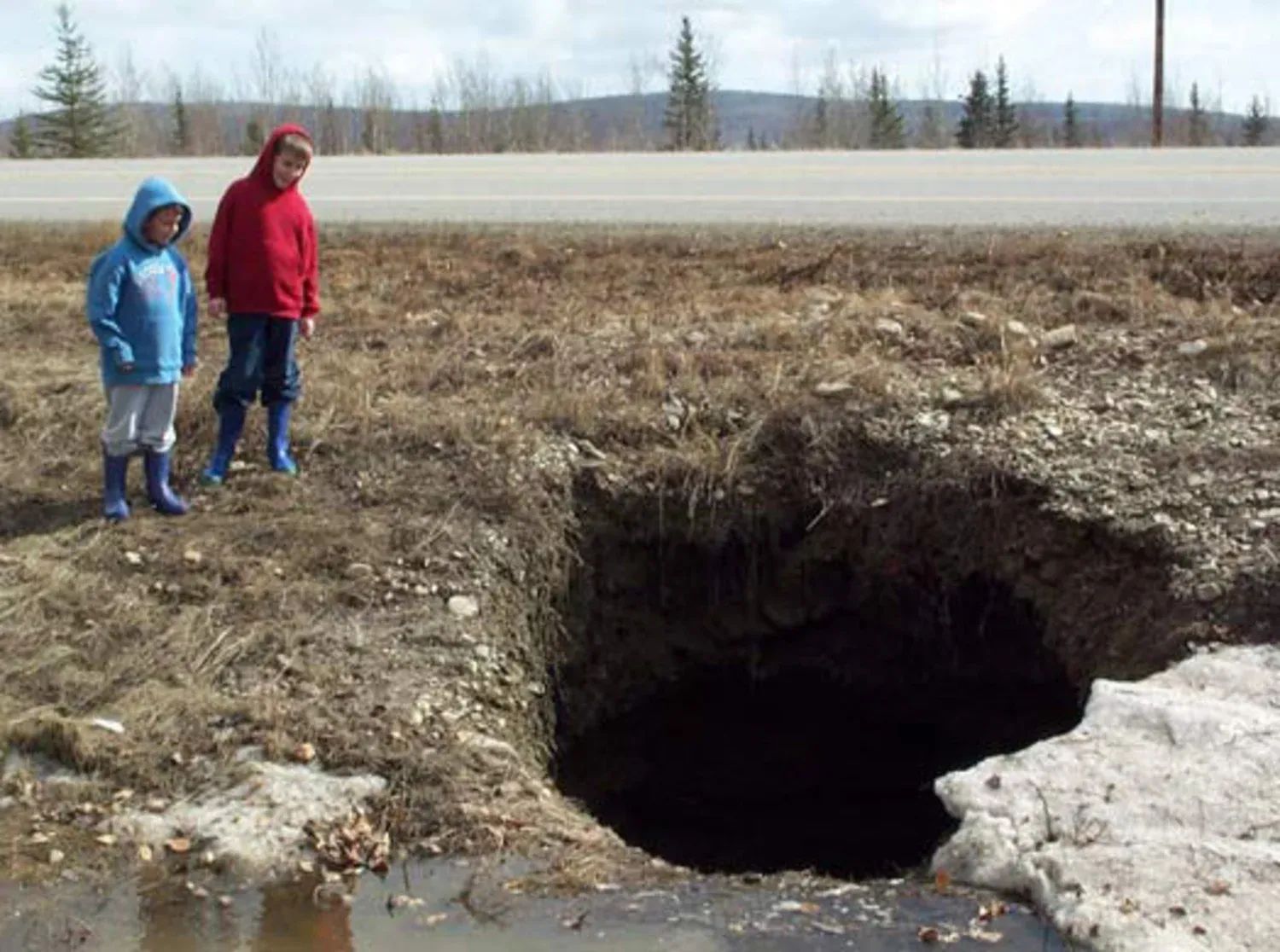
A Deep Dark Hole
Every task completed seems to create two more. At some point, the checklist stops feeling like progress—and starts feeling like the ground giving way beneath your feet.

Last week we made real progress preparing Rosemary for her Alaska trip.
The standing rigging is almost entirely replaced now. Wires and lines have been reconnected. The sails are back on the mast and forestays. There are still a few loose ends—some blocks to change, radar reflectors to install in the shrouds, and the last pieces of the mast electrical system to reconnect—but the rig is no longer an abstract project. It’s there. It’s taking shape again. A bill was paid.
The electrical system is catching up. We replaced the service batteries, installed a new battery monitor, reconnected the fuel level gauges, and added three bilge pumps to satisfy the insurer’s requirements.
The engine, too, is coming back to life. After cleaning the fuel tanks, replacing the injectors, and bleeding the lines, we tracked down a lingering issue: the lifting pump is getting tired, making starts more laborious than they should be. Another item on the list.
The watermaker has been recommissioned. It runs. It almost behaves. There’s a small leak left to fix.
I drove to Auckland on Monday—three hours each way—to get the life raft, life vests, and fire extinguishers recertified. That trip came with a strange kind of reassurance: seeing the life raft deployed, calmly, on land, before ever having to trust it at sea. I brought everything back to Opua on Friday, another six hours of driving.
The big projects are winding down. For the first time, it feels possible to think about something as simple—and as symbolic—as cleaning the boat before moving in.
And yet.
Even though we made progress last week, and the week before, and the week before that, the to-do list is not shrinking. If anything, it is expanding. Every completed task seems to generate two or three new ones, and they all feel more complex than the last.
Take something as simple as registration.
The boat is now officially registered in the UK. A small milestone. A box checked.
That triggered the need for a new radio license. Another box checked.
The radio license assigns a call sign and a Maritime Mobile Service Identity—an MMSI—to the vessel.
Which is where things begin to unravel.
Now every radio on board needs to be programmed with this new identity. And once an MMSI is set, it’s not easily changed. Each device has its own constraints, its own logic, its own friction.
So the list unfolds:
– Program the new MMSI into the fixed VHF
– Figure out what to do with the handheld radio—whether it can be reprogrammed or simply needs to be replaced
– Decide which replacement makes sense, and where to source it
Then come the edge cases.
The man-overboard devices embedded in the life jackets broadcast AIS signals with their own MMSI numbers. Do they need to be updated? Linked? Left alone?
And then the distress beacons.
The EPIRB is registered to the vessel, but through a different system altogether.
The PLBs are tied to individuals, not the boat.
Each system speaks its own language. Each one solves a slightly different problem. And none of them quite align.
What started as two simple tasks—registration and licensing—has quietly branched into five or six others, each with its own dependencies, its own uncertainties.
This is how the list grows.
Not linearly, but geometrically.
And somewhere along the way, the metaphor shifts.
It no longer feels like a checklist.
It feels like the ground is collapsing under my feet.
A hole opens, and the further I go, the deeper it gets.
I find myself thinking of a song by The Handsome Family—a man obsessed with a bottomless hole behind his barn, convinced there must be an end.
I recognize the logic.
And still I am there falling down in this evil pit
But until I hit the bottom, I won’t believe it’s bottomless.