
Stay With the Boat
I went into my STCW Personal Survival Techniques course curious about the white box we call a life raft. I came out with good memories and something that felt surprisingly like wisdom.

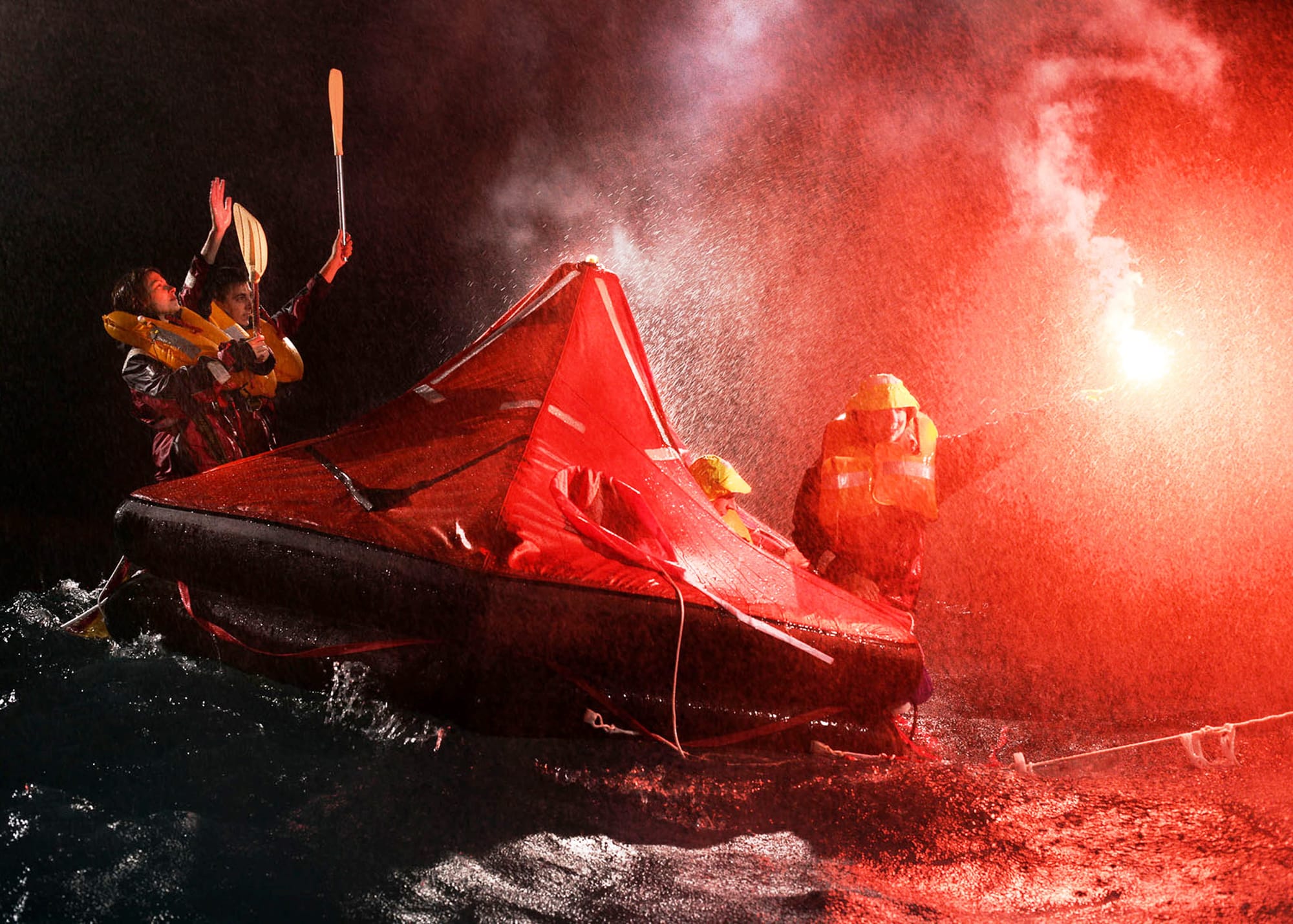
There's a piece of advice every sailor hears early on: stay with the boat. If something goes wrong, don't swim for shore. Don't strike out into the unknown. Stay with what you know, what floats, what can be seen by rescuers. It sounds counterintuitive when you're staring at the water and the shore seems close. But the boat — even a stricken, half-submerged one — is almost always your best chance of survival.
I've been thinking about that a lot since I spent a day doing my STCW Personal Survival Techniques course with SeaRegs. I went curious about the white box that we call the life raft. I came out with a head full of cold water and something that felt surprisingly like wisdom.
Why I Did It
If you're working towards any kind of professional maritime role, the STCW PST certificate is one of those foundational things you simply need. It's a requirement under international maritime law — specifically the Standards of Training, Certification and Watchkeeping convention — meaning it's recognised all over the world. Most of my fellow trainees were professionals working with or on boats.
My motivation was a little different. It struck me that sailing curricula are pretty light on survival. They teach how to avoid sinking, but they don't venture beyond this. They don't tell you what to do when the boat is in serious trouble. I'd been thinking for a while that I spend a fair amount of time on the water without really knowing what I'd do if things went seriously wrong. I have no idea what the life raft found on most boats looks like. I don't know how to deploy it. I am clueless about getting into it. It seems like responsible offshore sailing should involve a good understanding of my options if the boat is no longer one of them.
What the Day Was Actually Like
The course is a single day, and SeaRegs runs it out of their centre in Plymouth. You arrive knowing you will end up in a pool. This helps you pack appropriately. (Bring your own swimwear — the kit list is short, but that one is non-negotiable.) The idea of the pool practical session was surprisingly intimidating.
The morning is classroom-based, and it moves quickly. You cover emergency situations, muster points, survival priorities, and the logic of what to do when a vessel has to be abandoned. There's a lot of practical detail about equipment — lifejackets, survival suits, thermal protective aids, life rafts — how it all works, where it's stored, how to don it correctly under pressure.
What struck me was how much of this I'd assumed I understood and actually didn't. I knew lifejackets existed, but I did not know there were different types for different applications. I was aware of the pyrotechnics on the boat, but had no clear understanding of their different purposes. The gap between knowing something exists and understanding its purpose is wider than I imagined.
The instructor was Simon Jinks, SeaRegs founder. He brought incredible teaching and sailing experience to this programme.
Just as interesting were the students. Many of them were taking the class to meet their recurring training requirements, and they brought their stories with them. The delivery skipper who witnessed his crew launch the life raft when the wind was getting too strong, but the boat was still fine. The navy ship sailor reluctantly launches a Fast Rescue Boat in 30-foot waves to rescue a sailboat, only to be beaten by the coastguard helicopter. The merchant navy ship officer managing a piracy attack in the Mediterranean. These stories brought an unexpected level of fun and gravity to the training.
The Wet Drill
Here's the part everyone wants to know about.
Yes, you get in the water. No, it wasn't cold — they were kind enough to make us practice survival in tropical waters, not in the English Channel in winter. And no, it wasn't as bad as I was imagining — though also, briefly, worse.
The practical session covers liferaft launching, boarding (both dry and wet), jumping from height into water, capsize drill, and survival swimming techniques. You are in the pool, in immersion suits with bulky lifejackets, doing the actual thing rather than watching a video of it.
The capsize drill is particularly memorable. A life raft, it turns out, is perfectly designed to be righted — but doing it in the water, in immersion suits, while other people are climbing on or falling off, has a comedy element that the training video definitely doesn't prepare you for. You figure it out. Your body learns something your brain couldn't have learned in a classroom.
That's the whole point, really. The awkwardness is instructive. When your hands are clumsy and your instincts are shouting at you and you have to think clearly anyway — that's the skill. Not the theory. The doing.
The Part That Stayed With Me
Late in the morning session, we talked about cold water shock and the psychology of survival. About why people who could physically survive sometimes don't, and why the will to act matters as much as the knowledge of what to do.
And then there was that phrase again: stay with the boat.
I've been turning it over since. Because it applies, doesn't it? Not just at sea. There are moments in life — in work, in relationships, in the middle of projects that have gone badly sideways — when the instinct is to abandon what you've built and strike out for what looks like a better opportunity. And sometimes that is the right call. But often, the thing you're trying to leave is still the most visible, most stable, most survivable option. Jumping from the boat provides no assurance that you will land in the raft. Climbing in from the water is possible, but should not be taken for granted. And even if you make it to the life raft, I can assure you it's not comfortable — and I only spent a few minutes in one. I don't want to think what it would be like to spend days in that contraption.
If there is still a boat, stay with it.
Would I Recommend It?
Without hesitation.
Even if you never work professionally at sea. Even if you're a leisure sailor who mostly does day trips in calm conditions. Even if you think you'll never need it. The STCW PST course gives you a framework for thinking about emergency situations clearly, and a set of physical skills your body will remember under stress in a way no amount of reading can replicate.
The certificate is internationally recognised, valid for five years, and issued under MCA-approved standards. The course is one day.
You will get wet. You will be slightly cold. You will come home exhausted. And you will share a great moment of camaraderie with fellow seafarers. You will leave knowing something new about survival at sea — and probably on land as well.
And you might, like me, find yourself thinking about life rafts in unexpected moments — and what it means, in all kinds of situations, to stay with what keeps you afloat.
Related Posts
 Jean Peccoud