
My Pursuit of Happiness
A prompt from the New York Times made me ask myself: What does the pursuit of happiness really mean?

A few days ago, the New York Times asked its readers a question I wasn't expecting: What does the pursuit of happiness mean to you?
I've been thinking about it ever since.
The phrase comes from the Declaration of Independence, written as the United States approaches its 250th anniversary. It's one of those lines that sounds self-evident until you sit with it. Most people read it as a promise of well-being, maybe even comfort. But the more I've turned it over, the more I think the founders meant something harder than that.
Thirty years ago, I left a tenured academic position in France to rebuild my life in the United States. I came with the specific belief that this country offered something different — not a guarantee of success, but a genuine openness to reinvention. That belief turned out to be true. America gave me a second career, a new community, and eventually a kind of life I hadn't imagined when I first crossed the Atlantic.
So when someone asks me what the pursuit of happiness means, I don't answer as a detached observer. I answer as someone who once bet his life on it.
And yet, not long ago, I found myself in a position that felt strangely familiar — comfortable, recognized, and quietly restless. For years, I was a university professor, running a research laboratory, collecting grants and publications. It was a life many people would consider fortunate, and it was. But somewhere in the accumulation of all that stability, I began to feel that I was no longer quite living — I was preserving.
There was no single moment of crisis. Just a slow recognition that the future had become too predictable.
I started looking for a boat. I tried first in France, my home country. I'm not sure I fully understood at the time what I was looking for — a boat, yes, but perhaps also a sense of whether I could imagine rebuilding there, in a country I had left but never entirely stopped watching. France has changed. So has the United States. But what I found, somewhere in those fruitless searches along the French coast, was that the pull of the American story had become stronger than I realized — stronger, certainly, than whatever unease had sent me looking elsewhere. Eventually, almost improbably, I found my boat in New Zealand.
In a way, I am retracing my own history. Thirty years ago, I crossed the Atlantic toward America. Now I am crossing the Pacific toward its last frontier, approaching it the way the earliest explorers did — from the west. The voyage is different. The direction of longing turns out to be the same.
Alaska has its own particular pull in this story. Most people think of it as the last stop on the American westward journey — the final frontier, in the literal sense. But it was also first approached from the other direction: by peoples crossing the Bering Strait from Siberia thousands of years ago, and later by European explorers sailing from the Pacific. It sits at the intersection of two great directions of human movement, driven by the same things that have always driven people — curiosity, necessity, the feeling that something worth finding must lie just beyond what is already known.
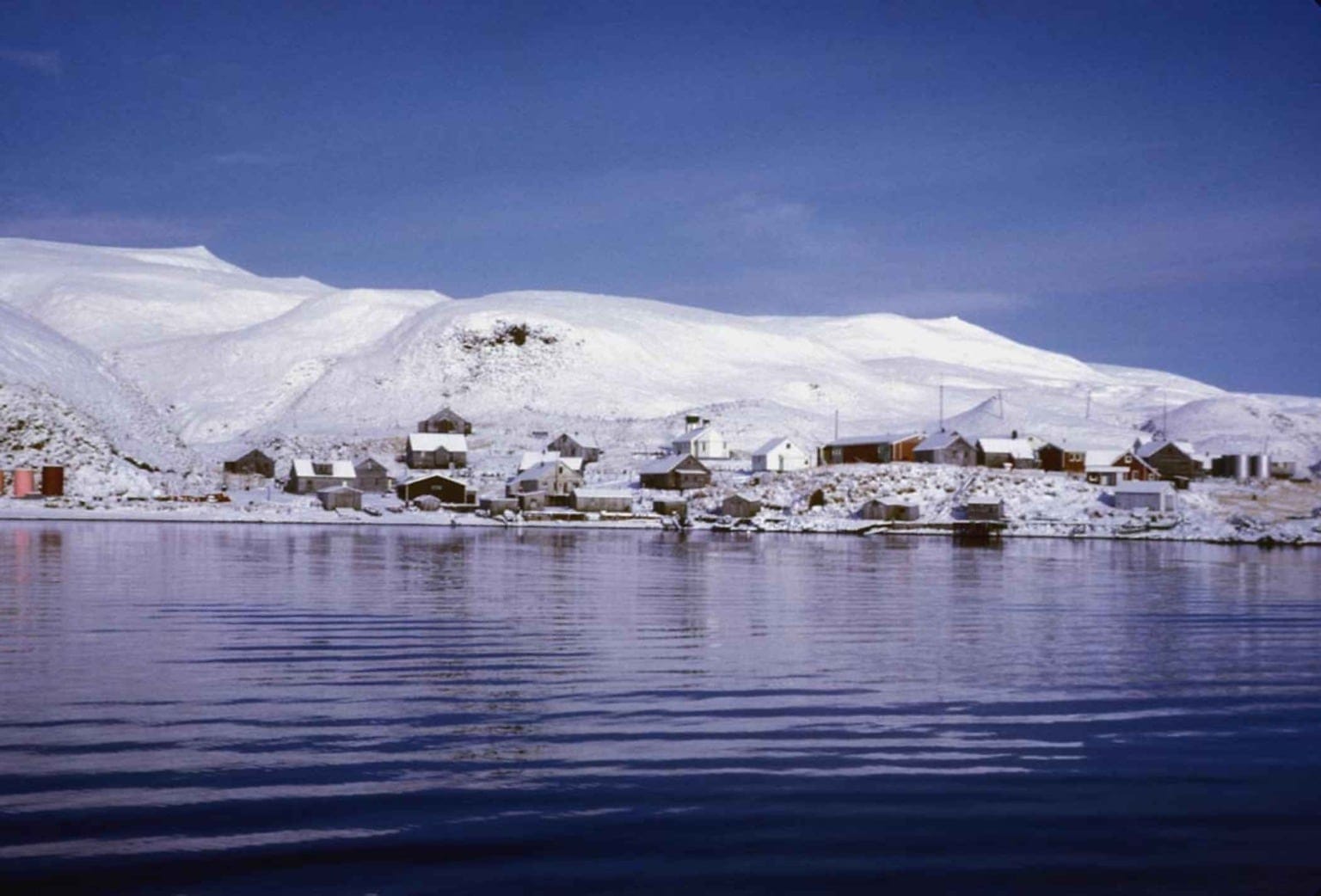
My hope is to follow that same approach — arriving from Hawaii, making landfall at Atka in the Aleutian Islands, the westernmost settlement in the United States, and then sailing the island chain eastward. Entering America from the west, the way the first Americans did.
My children are grown now. That fact matters more than it might appear in a sentence. It means I can take risks I couldn't have justified when they depended on me — and it means that how I live now is itself a kind of message to them. The risks we take later in life tell younger generations stories we could never tell in a classroom or at thekitchen table.
Every day of preparation makes the magnitude of what I've committed to more vivid. Charts, equipment, safety systems — the work is real, and the responsibility is heavy. But the deeper lesson of preparing a long passage is this: the boat will never be completely ready. The sailor will never be completely ready. At some point, we simply have to commit to facing the uncertainty we cannot eliminate.
I think that's what the founders meant.
They wrote about happiness in a time when life was genuinely precarious, drawing on Enlightenment thinkers who believed happiness came not from comfort but from living with virtue, purpose, and full engagement with the world. It was not a guarantee. It was an invitation — and a challenge.
Two and a half centuries later, Americans live with a safety and stability those founders couldn't have imagined. That's worth celebrating. But it can make it harder to feel the difference between happiness and mere security.
I came to this country because I believed the invitation was real. Thirty years later, preparing to sail toward its last frontier, I still do. My voyage won't solve anything larger than my own life. But in committing to a path whose outcome I cannot fully know, I find myself living closer to what I think that old phrase actually meant — not the promise of arrival, but the willingness to set out.