
Messy Boats, Messy Sales
Is this an invitation to move in with the owner or an offer to buy their boat?

I recently sold my house in Colorado.
When I first met the realtor, he laid out strict rules if I wanted him to list it.
I had to:
- Get rid of the coffee machine, the toaster, the TV—everything that defined my daily routines.
- Repaint the entire house in something as neutral as possible.
- Pack away family pictures, art, books—anything that might say something, anything at all, about me.
- Pretend I didn’t have a dog.
It took two months to sanitize the house so prospective buyers could project themselves into the space.
It took one day to sell it.
Later, a yacht broker in Florida told me he wouldn’t list a boat until the owner had removed anything that didn’t come with it. The boat had to be presented as if it were about to go on charter. Anything that sticks out can derail a sale by preventing buyers from taking psychological ownership of the space.
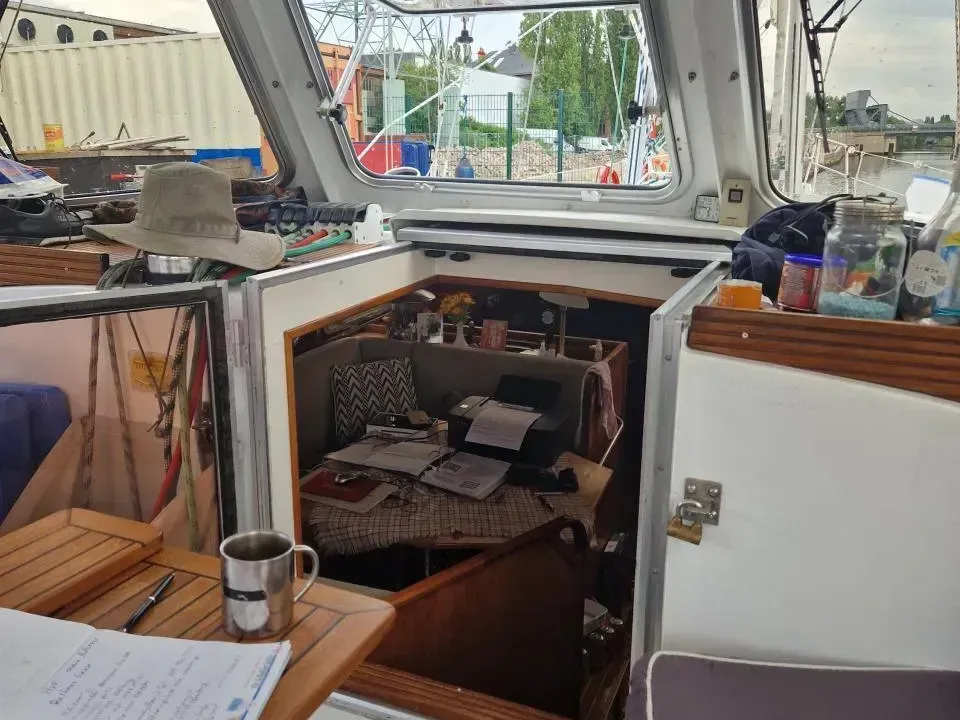
On my quest to find a boat for Ice Frontiers, I sometimes wondered whether owners were inviting me to buy their boats—or to move in with them. There’s a moment, just after stepping aboard, when you realize you’re not viewing a listing. You’re immersing yourself in someone’s life.
Some of these boats should replace their For Sale sign with a warning label: “Live archaeological site — enter at your own risk.”
Certain owners seem to embrace an unconventional marketing strategy. Instead of showing the boat, they provide an exhaustive ethnographic record, allowing prospective buyers to reconstruct the owner's life. I’m not entirely sure I follow the logic.
Am I supposed to buy a boat so I can inherit the same half-empty bottle of cheap wine, wear their favorite sun hat, and use the washer only after accumulating the proper amount of dirty underwear? Is the clutter the benefit I’m supposed to get from the boat?
Or is the clutter the operating manual? To sail this vessel, you must finish the wine. Wear the baseball cap. Maintain a steady supply of adequately soiled laundry.
I don’t know whether the clutter is the enabler or the goal, but for some owners, it is clearly central to their boating experience. The evidence is striking: boats that haven’t sailed in years often display an abundance of personal effects—telling the story of the owner’s relationship with the boat better than any photo album ever could.
Why sail anywhere when you can experience boating by spreading yourself in your boat from the comfort of the dock? Sailing, after all, is grossly overrated.
More seriously, you probably wouldn’t sleep in a hotel room saturated with the physical presence of the previous guest. Poor hospitality hygiene raises immediate concerns about health, safety, and trust. A dirty hotel room isn’t just unpleasant—it signals deeper, systemic problems.
The same applies to boats.
A messy boat is the best predictor of a messy transaction. It’s a telltale sign of deeper issues: emotional attachment, sloppy maintenance, missing documentation, blurred boundaries. The list is long.
So here are my rules now:
- If the listing photos are messy, don’t save the listing.
- If the boat isn’t properly prepared for your arrival, walk away.
At first, I thought buying a boat was an archaeological sub-discipline. I arrived at viewings ready to excavate my dreams from other people’s lives—Indiana Jones of the marinas, digging for clues in the sediment of clutter.
I don’t do that anymore.
Today, I show up expecting a boat that is ready to be taken over—clean, empty, and legible. If it isn’t, I don’t investigate. I leave.
Boats that are prepared to be sold are prepared to sail.
The rest are just exhibits.