Downsizing — Packing — Long Flight
The Pacific Expedition begins — not at sea, but in a storage unit. Clothes to Goodwill, a truck handed off, 170 pounds of luggage on a scale. Some departures happen before you ever leave the dock.

Downsizing
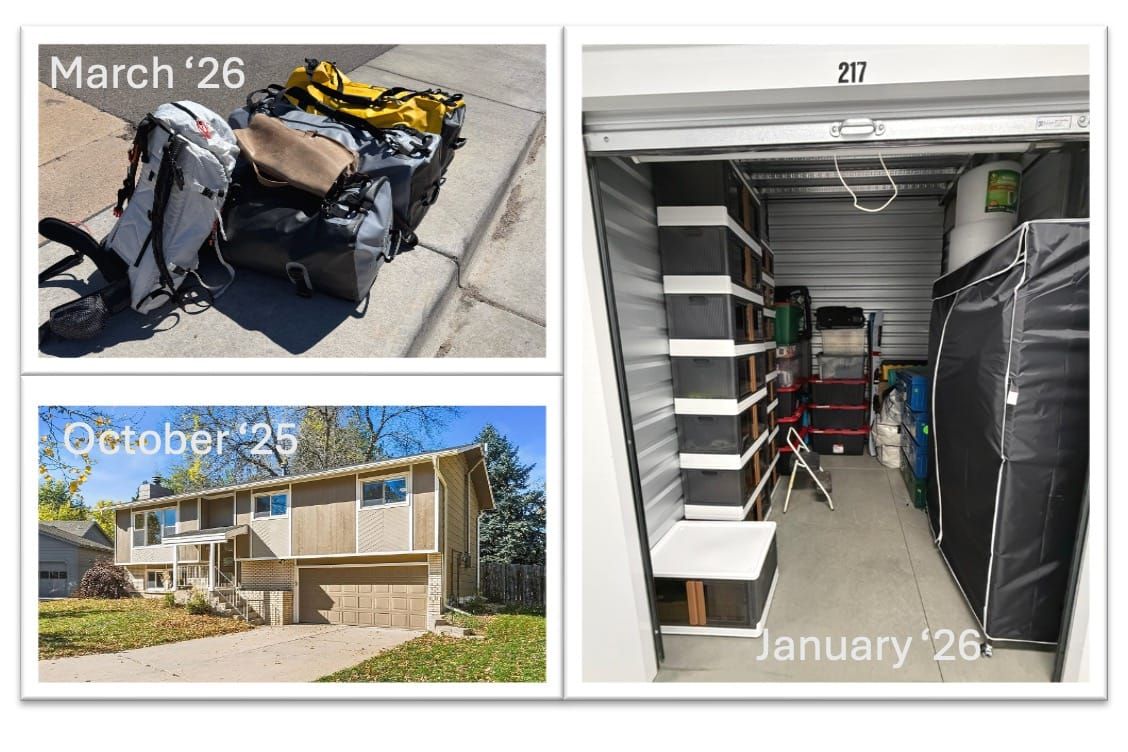
The main project this week was packing for the Pacific Expedition — and it forced a hard reckoning with the clothes I'd kept in storage. I pulled everything out. Some pieces were just worn through. Some I'd never really liked. Some had quietly become dated, fossils of a past self. Most of it went to Goodwill. What survived — a suit, a sport coat, my beloved leather jacket, a couple of pairs of trousers — earned a spa treatment at the dry cleaner before going back into storage.
Letting go of clothes I hadn't worn in years was surprisingly difficult. It felt like shedding a skin — and there's a moment in that process, when the old one is gone, and the new one hasn't grown yet, when you feel strangely exposed.
Along the same lines, I gave my pickup truck to Amélie. The math had become impossible to ignore: insurance, license tabs, maintenance — all for a car sitting idle while I sail. Samuel had taken her to 280,000 miles. I did my part, reaching 310,000. I'm hoping Amélie will carry her all the way to 400,000.
We love that truck.
I am glad she stays in the family. And I am confident Amelie will find exciting projects to pursue with her. But, she's also another piece of identity I had to release. Without a car — without even car insurance — I feel unexpectedly unmoored. More exposed than I'd anticipated.
Packing
Packing had its own logic and its own challenges.
The first problem was the containers. Suitcases are unwelcome on a boat, so I needed bags that would stow properly below deck — while also being large enough to maximize the baggage allowance without crossing into oversized territory. My backcountry ski pack found a second calling.
Then came the harder puzzle: what do you bring on a voyage that includes hard labor on the boat, sailing in tropical waters, and then months in cold Alaska? Running clothes and hiking gear practically leapt out of storage, relieved to be useful again.
Somehow, I solved it. Every bag landed at exactly 50 pounds. Backpack at 20. It's a lot of luggage — probably more than I need — but I'll find out.
The Flight
This one is long.
I left Saturday afternoon for Denver International, connecting through San Francisco, and leaving SFO just before 11 pm. Arrival in Auckland: Monday morning at 8 am. The flight is only thirteen hours, but Sunday simply vanishes somewhere over the dateline. I just can’t get used to it. People say, you’ll get the time on the way back. But somehow, an overextended day spent at 30,000 ft does not make up for a missed Sunday on the ground.
I'll spend a night in Auckland to recover before catching a flight to Kerikeri on Tuesday morning. I hope Air New Zealand will be as forgiving about luggage as United turned out to be.
The final leg to Opua will be done in the smallest, oldest rental car I could find. So, after leaving Saturday, I'm hoping to reach Opua — luggage and all — around noon on Tuesday. Wish me luck.
Related Posts
 Jean Peccoud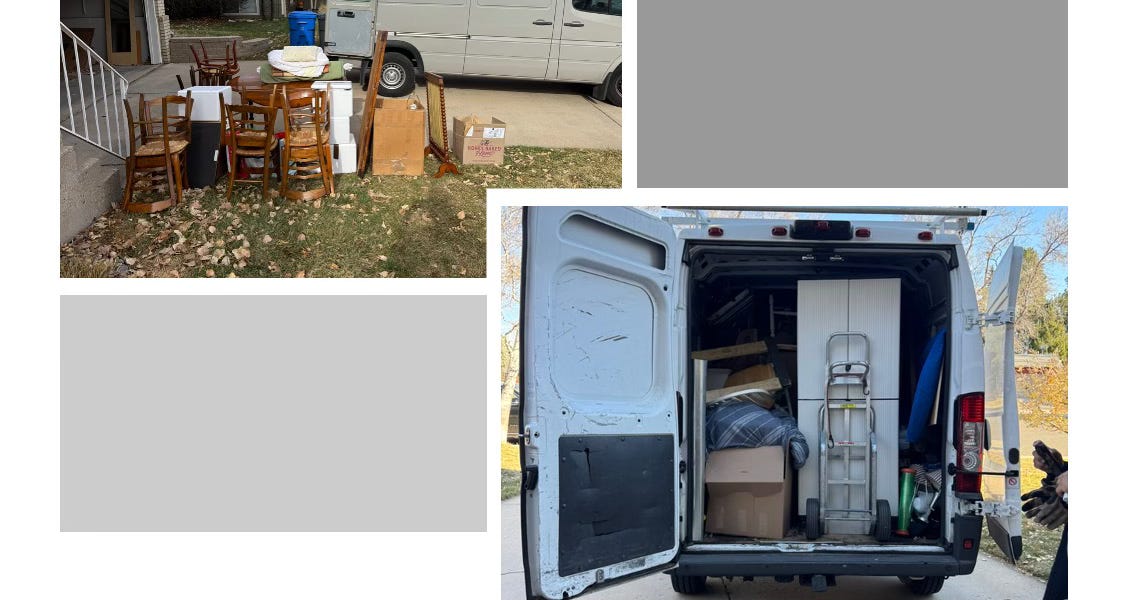
Recent Posts
 Jean Peccoud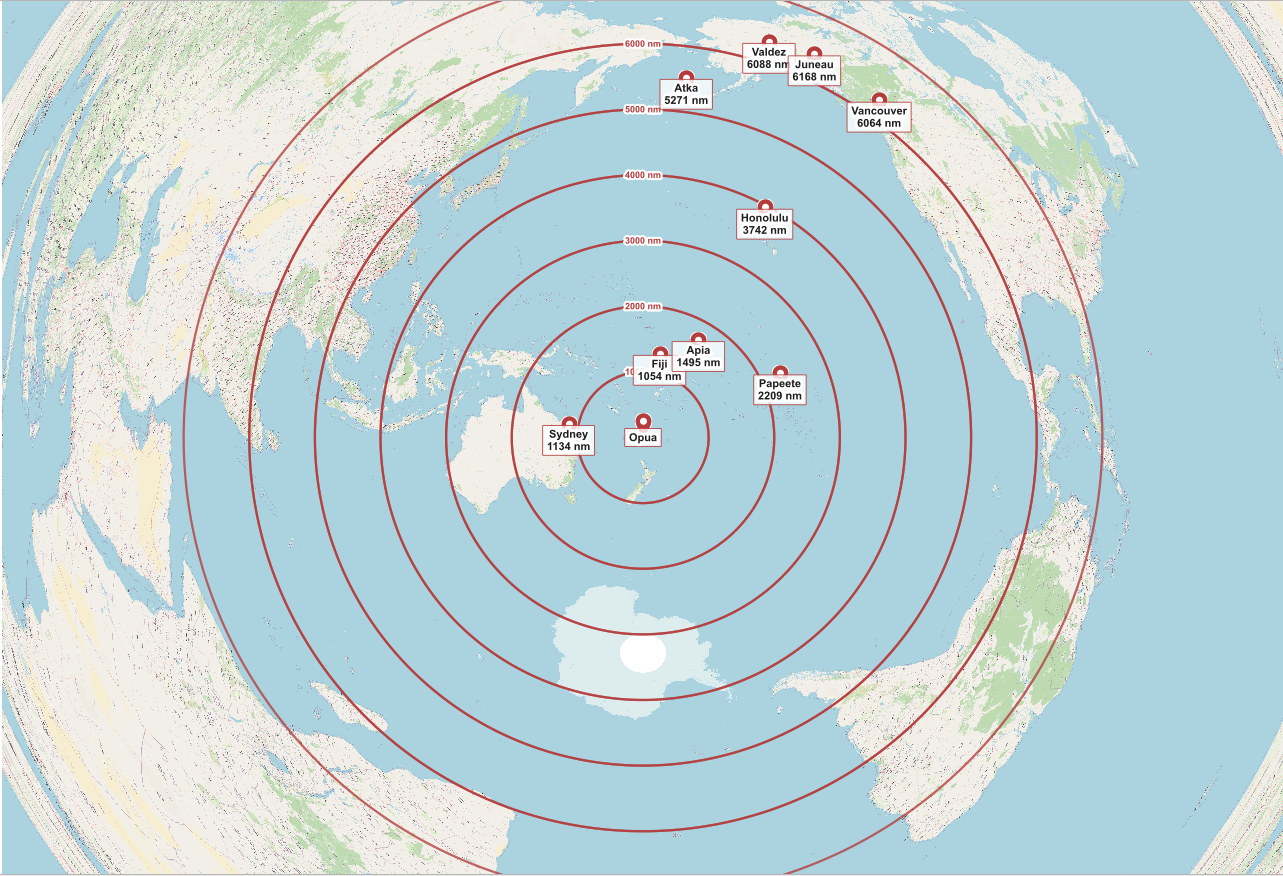
 Jean Peccoud