
Buying a Boat in France
Nobody wants to sell.

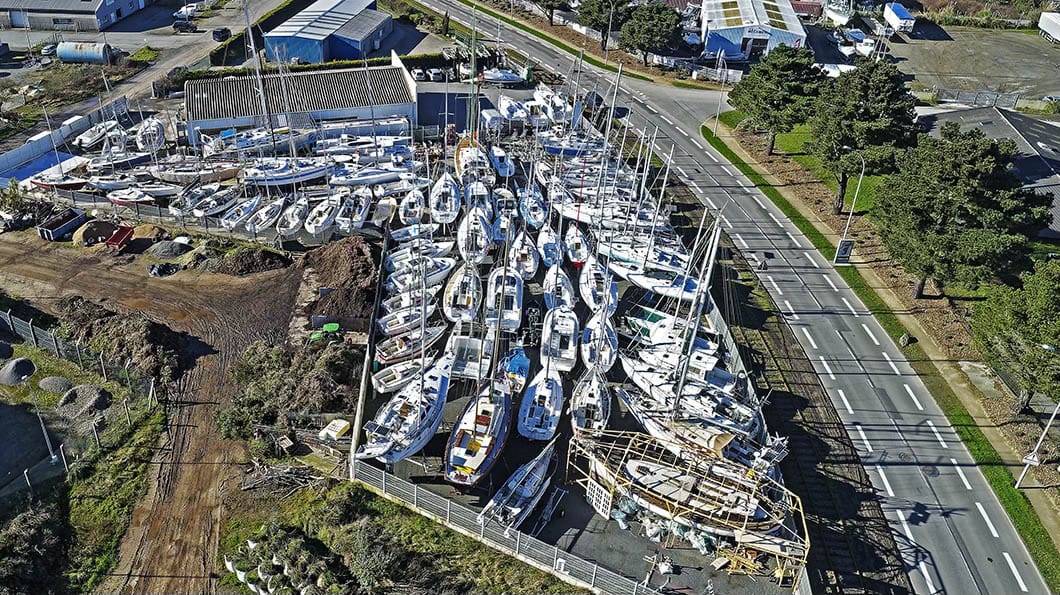
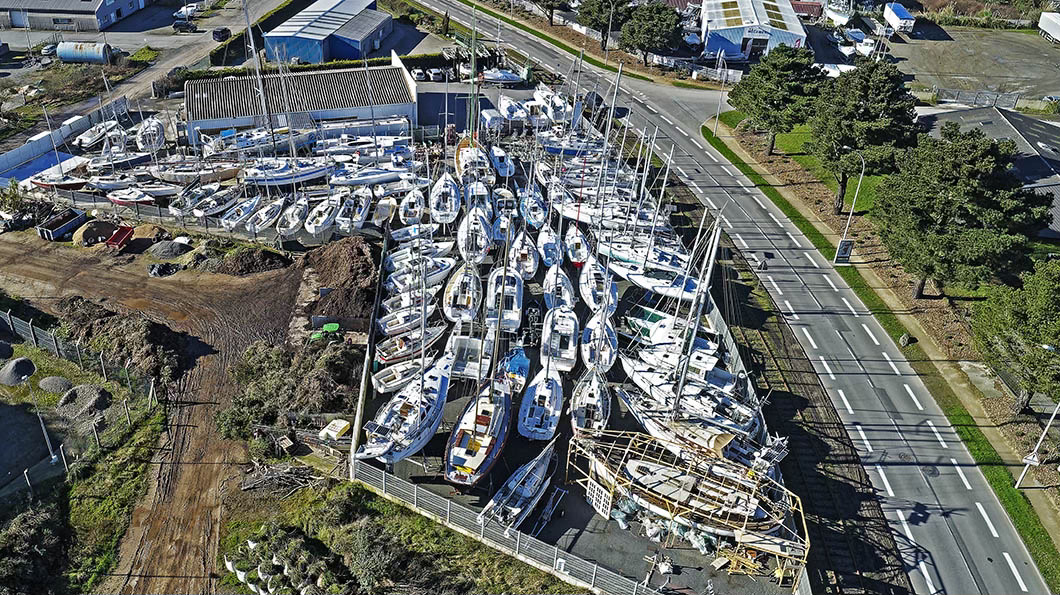
Location: Port de Vannes, Morbihan (France)
Conditions: 10°C, calm, rainy
There is a strange paradox unfolding along the docks of western France.
A country that builds some of the finest sailing machines on earth—sleek aluminum hulls, carbon rigs, expedition-tested legends—seems unable to build the basic scaffolding needed to sell them.
A month ago, I moved to Brittany to buy a boat.
Harbors are filled with competence.
Craftsmanship is everywhere.
Boats emerge from the yards with a level of technical obsession that borders on art. Offshore, France is a superpower: Vendée Globe, IMOCA, Ultims—no one sails at this level. Out there, in the wind and spray, French vessels are unstoppable.
And not only are the boats excellent—they are everywhere. France is the largest sailboat producer in the world. Jeanneau, Bénéteau, Dufour, Garcia, Alubat—names that echo across marinas on every continent.
I came prepared. I had a list of specifications.
I had spent months researching brokers, shipyards, and market dynamics.I even started building relationships six months ago—emails, calls, small conversations—to understand who the serious players were.
I rented an Airbnb strategically located at the center of gravity of the aluminum sailboat universe. From there, I could visit a boat a day.
I arrived at the end of November excited, energized. I imagined buying a boat for Christmas, maybe finishing surveys before year-end. A refit in January–February, shakedown in March–April, departure for the North in May.
Within days, I realized I needed to adjust my expectations.
Some boats listed for sale were simply not available.
One was hauled out for the winter, buried behind five rows of other boats. It had holes in the hull and wouldn’t see water until May.
Others were trapped upriver behind a lock that doesn’t open until April.
Naïvely, I assumed a boat listed for sale would be available for a sea trial and survey.
Apparently not.
How, exactly, are these boats supposed to change owners if they can’t reach the sea? I now wonder whether owners suffer from a particular kind of separation anxiety.
They list the boat—but then physically block it, just to make sure nobody actually takes it.
Or perhaps they expect people to purchase not the boat, but the memories. The boat becomes an accessory to the story, a souvenir with sails.The owner recounts crossing oceans, surviving storms, raising children aboard—clearly priceless stories. Why would the boat need to float?
Eventually, I found a few boats that matched my criteria and were somewhat accessible.
So I started making offers.
An offer, in my mind, is the beginning of a conversation.
A good conversation has momentum and pace.
One side speaks, the other responds, the dialogue tightens, ideas converge.
The art of witty, fast-paced conversation that thrives in Paris cafés has not yet reached the shipyards of Brittany.
Emails float unanswered for days.
An offer sent on Thursday might be read Tuesday at lunch.
Phones ring, but never back.
Texting is almost unheard of.
A conversation without momentum is boring. It makes you wonder whether you should be talking to someone else.
And a conversation where the only response is no is dead before it started.
I never expect a seller to accept my first offer.
But if you won’t accept it, say something.
Push back. Counter. Play.
Conversations build trust.
I cannot buy a boat without a seller.
You cannot sell your boat without a buyer.
And at this point, I may very well be the only person offering anything for your boat.
I am the market.
So, talk to me.
Don’t tell me about your memories.
Don’t tell me how much you spent on upgrades.
Tell me how much you want to move on with your life.
Give me a number. A timeline. A condition. Something to work with.
Don’t just say no.
Don’t walk away.
I don’t chase.
Ever.
Fortunately, the paperwork is simple.
Almost charmingly simple.
Most purchase agreements fit on a single page. Some are even shorter.
Deposits are wired to personal accounts, sometimes corporate accounts, never escrow—“to keep things simple.”
Boat descriptions are minimal.
One broker’s entire listing consisted of:
“Jean knows the boat he is buying.”
Elegant. Concise. Minimalist.
The underlying assumption seems to be that nothing ever goes wrong during a boat purchase in France. Buyers are committed, sellers honest, and everyone trusts everyone else to handle money with perfect integrity.
Surveys and sea trials are optional, ritualistic—pleasant formalities rather than technical evaluations.
But behind this charming simplicity lies an astonishing amount of friction.
Boats sit unsold for months.
Sellers continue to pay to maintain assets they no longer use.
Buyers burn time and money chasing boats that may or may not exist.
Brokers carry too many listings that will never sell.
There is inventory.
There is demand.
And in between, a system struggling to bring the two together.
How is it that an industry capable of engineering world-class boats admired everywhere cannot engineer the processes needed to keep these boats moving?
Eventually, competitors with less impressive boats but better processes will win—because at least their boats can reach the water.
I’m beginning to broaden my search.
France may build extraordinary vessels, but buying one sometimes feels like trying to adopt a cat that keeps slipping out the back door. If a seller from another country actually wants to sell me a boat, I’m listening.
Do you have a boat — a real one, not buried on the hard until May, not trapped behind a seasonal lock, not protected by layers of sentimental fortification?
Do you have an extraordinary vessel that can take me north into cold weather, ice, into waters where few boats dare to go?
Please reach out.
I’m not hard to find.
And I’m probably the most motivated buyer in western Europe right now.