
What is an Expedition Boat?
The kind of boats we are looking for...

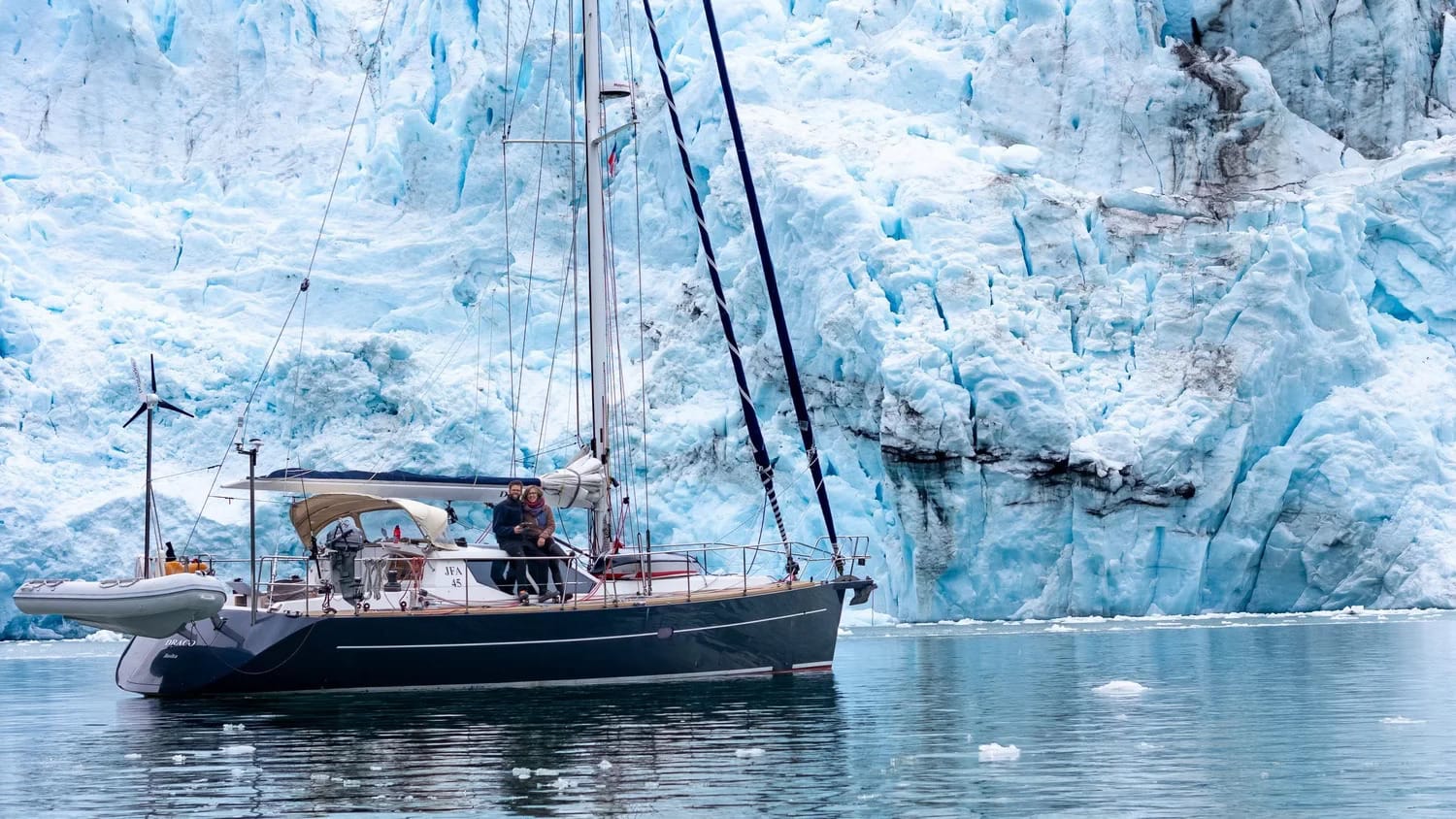
I have been looking for a boat since July.
Several readers have asked—sometimes impatiently—when I am finally getting one.
That feels like a fair question.
It also feels like the right moment to explain what kind of boat I am looking for. Because an expedition boat is not just a bigger cruiser, or a tougher-looking yacht. It is a fundamentally different answer to a different question.
Coastal Cruisers, Blue Water Boats, and Expedition Boats
Most people experience sailing on coastal cruisers. These are comfortable boats, optimized for short trips in warm weather, easy access to marinas, and life at anchor. They are designed to be pleasant places to spend a week or two, often with an emphasis on space, light, and amenities. Sailing matters—but it is not the primary constraint. Ease of use, comfort, and lifestyle take precedence.
There is nothing wrong with these boats. They are very good at what they are designed to do.
Blue water boats are designed with longer distances in mind. These are the boats that cross oceans and support life aboard for months rather than days. They tend to be heavier, more robust, and more complex than coastal cruisers. They often carry additional systems—generators, watermakers, larger tankage—to support autonomy offshore. They are meant to keep going when the nearest port is no longer nearby.
Expedition boats belong to another category altogether.
They are designed to sail in challenging waters: high latitudes, cold climates, remote regions where help is far away, conditions are unpredictable, and retreat may not be an option. They are not defined by comfort or speed, but by intent—and by the acceptance of consequences. Every design choice reflects the assumption that things will eventually go wrong—and that the crew must be able to deal with it.
That is the kind of boat I am looking for.
Structure: Designed for Consequences
Most expedition boats are built in aluminum. Compared to GRP (fiberglass), aluminum behaves differently under stress: it bends before it breaks. That matters when sailing in poorly charted areas, narrow harbors, or icy waters where impacts—whether with uncharted rocks or floating ice—are not theoretical risks.
Expedition boats typically use thicker plating than conventional blue water boats. This adds weight, but it also adds margin. In these environments, strength matters more than performance.
Insulation: The Difference Between Endurance and Misery
Aluminum conducts heat extremely well, which makes insulation critical. Without proper insulation, condensation becomes relentless. Moisture from breathing, cooking, and outside humidity condenses on cold surfaces, soaking bedding, clothing, and insulation itself.
Anyone who has gone winter camping knows this feeling. A boat in cold weather behaves like a sealed shelter constantly fed with moisture. Without insulation, life aboard becomes exhausting—not because of danger, but because of discomfort.
A well-insulated boat is not a luxury. It is what makes long-term life in cold regions possible.
Size: Space as a Survival Parameter
Sailing in cold weather changes how you live aboard.
You spend more time inside. You carry more gear. You go for months, not weeks. And when conditions are difficult, people need space—not for luxury, but for psychological endurance.
That is why expedition boats tend to be larger. For this project, I am looking at boats around 50 feet, plus or minus five. These are not small boats. But the size is not about comfort in the conventional sense. It is about storage, redundancy, workspaces, and giving a crew enough personal space to function well over long periods.
Smaller boats can do it—but the human cost is higher.
Cockpit: A Place of Work
The cockpit is not a lounge. It is where the boat is steered in difficult conditions, where lines are handled during approaches, and where decisions are made when the autopilot is no longer appropriate.
In cold, wet, or icy environments, exposure matters. Expedition boats favor protected cockpits: doghouses, deep cockpits with solid protection, or fully enclosed pilothouses. The goal is simple—operate the boat while minimizing exposure to wind, rain, snow, and freezing spray.
You should be able to sail the boat without sacrificing the crew to the elements.
Rigging: Designed to Be Handled, Not Admired
Expedition boats are rigged to handle a wide range of conditions safely.
Historically, many were ketches, with smaller sails divided across two masts. Today, most modern expedition boats are cutters, carrying multiple headsails that allow flexible sail plans as conditions change.
What matters more than rig type is operability.
On some boats, all sail handling can be done from the cockpit, prioritizing safety and short-handed sailing. On others—designed for crewed operation—critical lines are kept at the mast to reduce friction and keep the cockpit dry and uncluttered.
There is no universal solution. There are only trade-offs aligned with how the boat is meant to be sailed.
Technical Spaces: Designed to Be Understood
Anything on a boat can break. Everything will, at one point or another.
Some boats hide critical systems under floors, berths, and cabinetry. Others are designed with discipline: engines, electrical systems, plumbing, and steering components are concentrated in dedicated technical spaces, often alongside a small workshop.
At sea—or in a remote harbor—access matters. Understanding matters. A boat that allows you to see, reach, and diagnose its systems is a safer boat than one that simply looks clean.
Systems: Autonomy in Practice
Heating
Cold demands heat. Expedition boats typically rely on diesel-fired systems, using the same fuel as the engine. Forced-air heating works well underway and heats quickly, but it consumes electricity. Solid or liquid-fuel stoves provide radiant heat, are electrically independent, and are more comfortable at anchor—but are less suitable at sea.
Ideally, an expedition boat carries both. Redundancy is not excess. It is resilience.
Tankage
Autonomy depends on storage. Fuel and water tanks determine how long a boat can remain independent, how freely it can motor out of danger, and how much margin exists when plans change. Large tankage expands the decision space offshore.
Watermakers
Desalination systems extend water autonomy, but they can fail. Large water tanks remain essential. Watermakers are a supplement—not a substitute—for capacity.
Electricity
Electricity is the blood of the vessel. Navigation, communication, lighting, refrigeration, autopilots—everything depends on it. A boat that loses power becomes very difficult to manage.
Expedition boats cannot rely solely on shore power or engine alternators. They typically combine solar, wind or hydro generation, and sometimes a dedicated generator. Power is always scarce. Producing it reliably, in multiple ways, is essential.
Price, Availability, and Why This Takes Time
Expedition sailboats are complex. Only a few shipyards specialize in designing them specifically for high-latitude sailing. New boats from these yards are in high demand, often with multi-year waitlists, and prices in the millions.
The used market is smaller and harder to read. Many capable boats are not clearly identified as expedition boats—only as robust blue water boats with expedition potential. Truly suitable boats under reasonable budgets are rare, scattered around the world, and never perfect.
Every candidate requires careful analysis: conversations with brokers and owners, system diagrams, video walkthroughs, surveys, and a realistic assessment of refit and delivery costs.
That is why this search is taking time.
An expedition boat is not something you stumble upon. It is something you choose deliberately, knowing that no boat meets all criteria—only compromises aligned with a mission.
The question is not whether a boat is perfect.
It is whether it is honest about the limits it can safely push.
That is the boat I am waiting for.