
Waitangi Day
Standing in Paihia, next to the treaty grounds, I encountered a national day shaped by remembrance, restraint, and an unresolved shared history — one that quietly challenged the triumphalist narratives I’ve grown used to elsewhere.

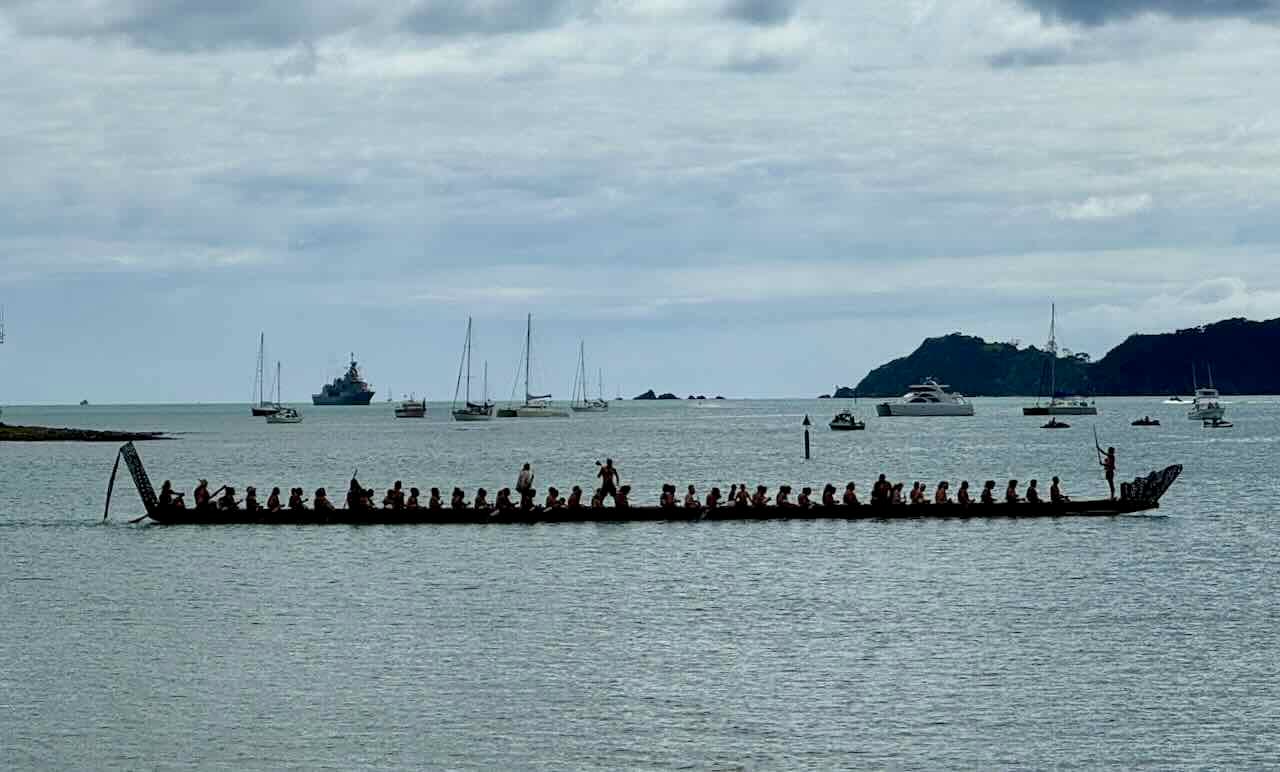
Friday was Waitangi Day (6 February), New Zealand’s national day, officially marking the founding of the nation. Until last week, all I knew about Waitangi Day was that it meant a long weekend. I was in Paihia, right next to the Waitangi grounds where these events unfolded, and that proximity mattered. This wasn’t history I had gone looking for, or a celebration I had joined from the outside. It was history pressing in on daily life — on the land, the water, the conversations, the rhythm of the place — and slowly making itself felt.
Waitangi Day marks the signing of the Treaty of Waitangi in 1840, an agreement between representatives of the British Crown and many Māori rangatira that is often described as New Zealand’s founding document. Less visible, but present everywhere I was staying, was 1835 — the year Māori chiefs signed the Declaration of the Independence of the United Tribes of New Zealand, asserting sovereignty before formal colonization.
I went. I joined. I watched Waitangi Day with the eyes of a European immigrant who has spent thirty years in the United States, growing increasingly uncomfortable with the narrative this nation chooses to remember about its founding — what it highlights, and what it decides to ignore.
What struck me first was the tone.