
Resilience
From witnessing to adapting

Ice Frontiers began as a project of witnessing.
The original impulse was simple and demanding: go to the edge of change, stay long enough to really see what is happening, and document it honestly. Ice does not disappear in a single dramatic moment. It retreats, fractures, accelerates. Witnessing means resisting the temptation to look away—or to soften what we see to make it easier to digest.
But witnessing alone is not enough.
Over time, I realized that the true purpose of witnessing is acceptance. And acceptance is not defeat. Acceptance is the prerequisite for adaptation. Without it, we oscillate between denial and panic. With it, resilience becomes possible.
This evolution—from witnessing to adapting—is at the core of Ice Frontiers.
Resilience is often treated as a technical problem. Engineers design redundancy. Organizations plan for failure modes. Economists model shocks and recoveries. At every scale—individuals, teams, systems, economies, civilizations—we talk about resilience as something we can build into structures.
Yet no structure is ever sufficient on its own.
There is always a moment when systems fail beyond their design envelope. When conditions exceed assumptions. When the plan no longer fits reality. At that point, resilience stops being theoretical and becomes human.
High-latitude sailing is an unusually honest laboratory for this. It compresses multiple scales of resilience into one fragile ecosystem: the sailor, the crew, the boat, and the boat as a micro-economy of power, heat, food, rest, and attention. Nothing stays abstract for long. Decisions have consequences, quickly and visibly.
Engineering matters. Preparation matters. But what often determines outcomes is psychology.
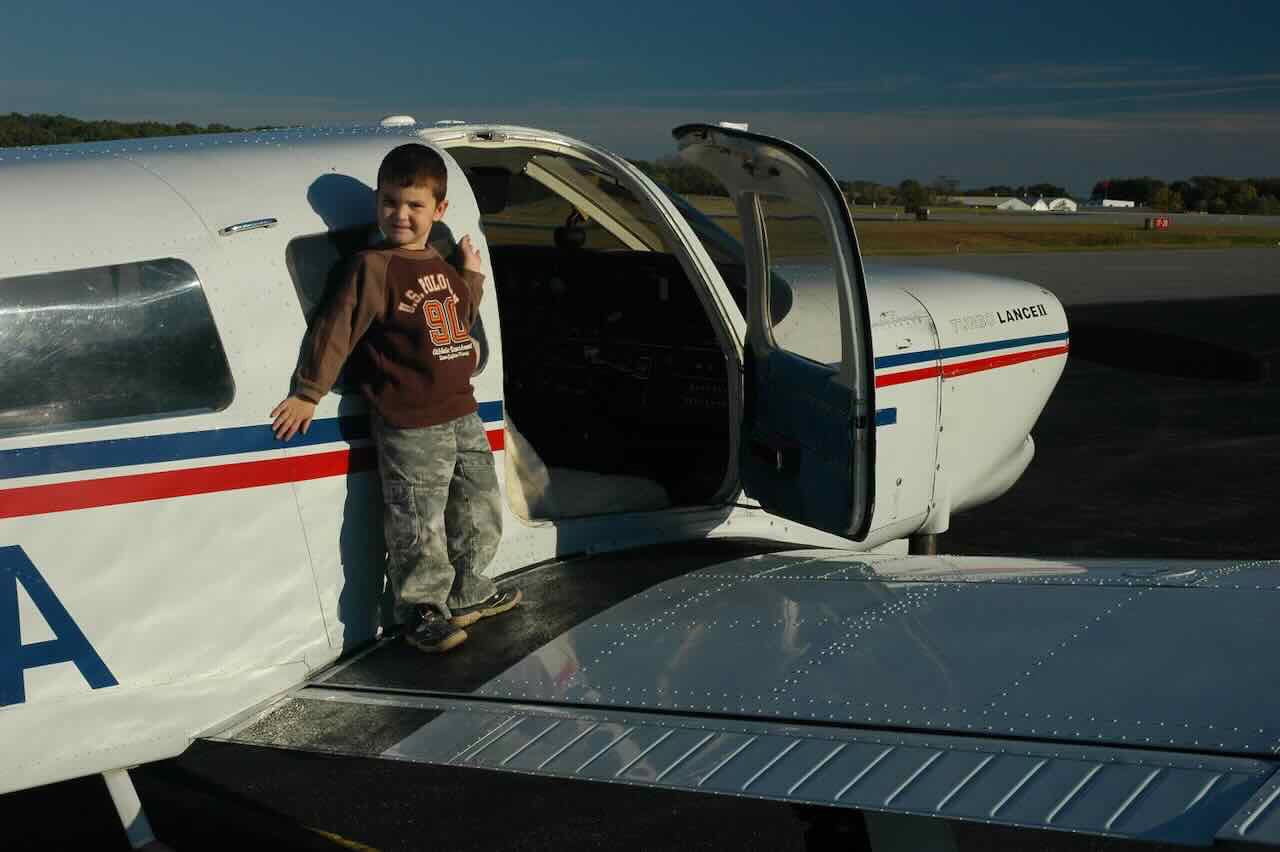
Before Ice Frontiers, I spent part of my life flying airplanes. Over the years, I faced my fair share of emergencies: engine failures, electrical problems, and severe weather. As a flight instructor, risk management and decision-making under pressure were not abstract concepts — they were the core of what I taught. I didn’t just teach people how to fly airplanes—I taught them how not to crash them when the unexpected becomes the new reality. The aviation industry learned, through painful experience, that many accidents are not caused by failures but by predictable human attitudes under stress:
- Don’t tell me.
- Do something—anything—right now.
- It won’t happen to me.
- I can handle this.
- What’s the point?
These are not airplane problems. They are human problems. They emerge wherever uncertainty meets ego, fear, fatigue, or identity. They show up at sea. They show up in organizations. And they show up, at a planetary scale, in how we respond to climate change.
We have spent decades witnessing climate change. The data are overwhelming. The images are unmistakable. But witnessing without acceptance breeds denial. Acceptance without adaptation breeds paralysis. Resilience lives in the narrow, demanding space between the two.
This is where Ice Frontiers situates itself.
Not as a project of alarm, but of maturity. Not as a call for heroics, but for disciplined adaptation. Sailing at high latitude is not about conquering nature—it is about learning how to operate within its constraints, adjusting continuously, and recognizing early when attitudes—not conditions—become the real risk.
Resilience, in this sense, is not about “bouncing back.” There is no going back. It is about learning how to move forward without illusions, without panic, and without surrendering agency.
Witnessing brought me to the edge.
Acceptance keeps me honest.
Adaptation is what allows the journey to continue.
That is the deeper mission of Ice Frontiers: not just to document a changing world, but to explore—through lived experience—what resilient thinking looks like when conditions are no longer negotiable.