
Life Without Certainty
Resilience and Responsibility - Part V

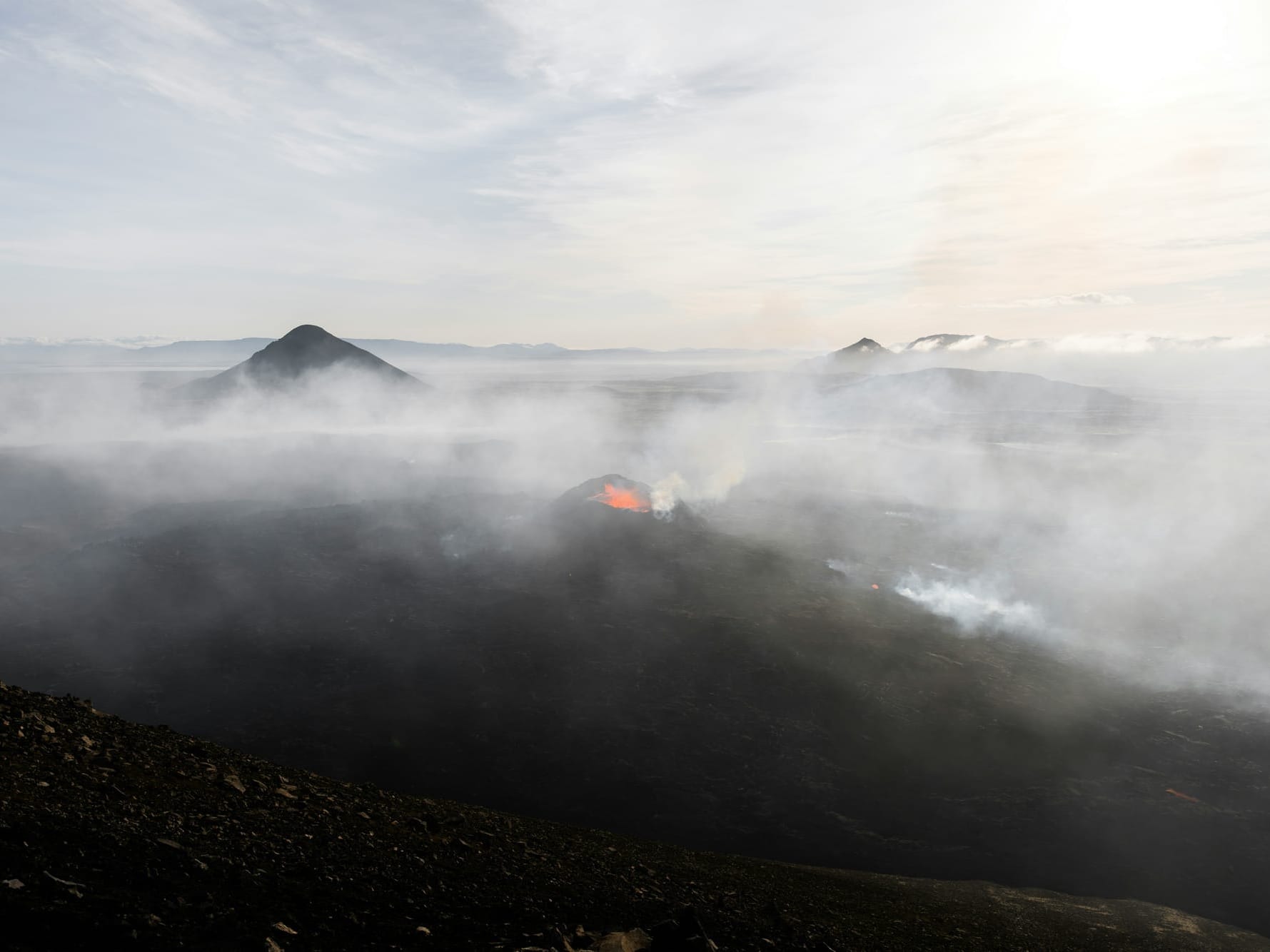
For most of human history, the environment functioned as a universal reference. It was the world we lived in, and it was assumed to be stable—at least at the scale of a human life.
While many aspects of my life were uncertain, the environment was not. Seasonal variations existed, but they oscillated around a constant. Snow would return to the Alps each winter. Water would be available in the summer. Crops might fail occasionally, but failure was not the norm. Even extreme weather events, though sometimes devastating, were understood as rare exceptions rather than structural conditions.
We never imagined an environment in which decades-long droughts could alter ground structures enough to compromise the integrity of buildings across entire regions, or in which water scarcity would become a persistent condition rather than a temporary anomaly. Each new manifestation of climate change now triggers not only material disruption, but a deep sense of loss—the nostalgia for a world we assumed would remain—and a growing anxiety about our ability to inhabit one that is changing so quickly.
The climate and environment were also assumed to be stable at historical timescales. Modern societies were built on this assumption, along with the belief in effectively limitless natural resources. While ancient societies often lived closer to the constraints of their local environments, the economic systems that dominate the world today were constructed on the premise of environmental constancy. When reality contradicts these premises, responses tend to focus on tactical mitigation rather than on reassessing the foundations themselves.
As citizens living within these systems, the inadequacy of institutional responses raises a second source of unease: uncertainty about the social environments we depend on to face these challenges. The possibility of systemic collapse—or of their replacement by yet-unknown alternatives—can no longer be dismissed.
We are thus witnessing, within a single lifetime, the destabilization of the two primary references that once oriented us: the natural environment and the social structures built upon it. This convergence produces a distinct form of existential dread. We can no longer evaluate ourselves in relation to a world that changes more slowly than we do. The world itself is now shifting faster than our inherited frameworks can accommodate.
When external references lose their stability, they lose their orienting power. Meaning can no longer be derived from alignment with a world assumed to be constant. The reference can no longer be found outside; it must be found within.
This forces a profound reconfiguration. I must develop a new understanding of progress, discover new sources of meaning, and accept a responsibility I did not choose. In a world where uncertainty has become structural, moral frameworks built on predictability and long-term reassurance no longer suffice.
To live in such a world requires learning to inhabit the present without guarantees—without assurance of survival, redemption, or improvement. No society, no religion, no inherited moral system offers a turnkey solution to this condition. Confronting it becomes an irreducibly personal task.
Without this preliminary existential work, attempts at collective solutions risk being driven by fear or denial—and are likely to be met with inertia. Only responses that can be inhabited at the level of individual lives have a chance of enduring.
I find it comforting to remind myself that the uncertainty introduced by climate change is not entirely unprecedented. Death has always been the ultimate horizon of uncertainty, present in every life. For much of history, however, this fact could be deferred, individualized, or ignored. It belonged primarily to the old, the sick, or the unlucky, while the rest could live as if certainty were intact.
What has changed is not the existence of uncertainty, but who can afford to ignore it. Climate change removes the privilege of postponement. It confronts entire societies, simultaneously, with limits that were once faced privately and late in life. I don’t know if this shared exposure might lead to moral renewal. But it does force a reckoning. When uncertainty can no longer be outsourced to the margins, questions of meaning, responsibility, and dignity return to the center of collective life—without guarantees, and without exemptions.