
Going North
What is so special about the Arctic?

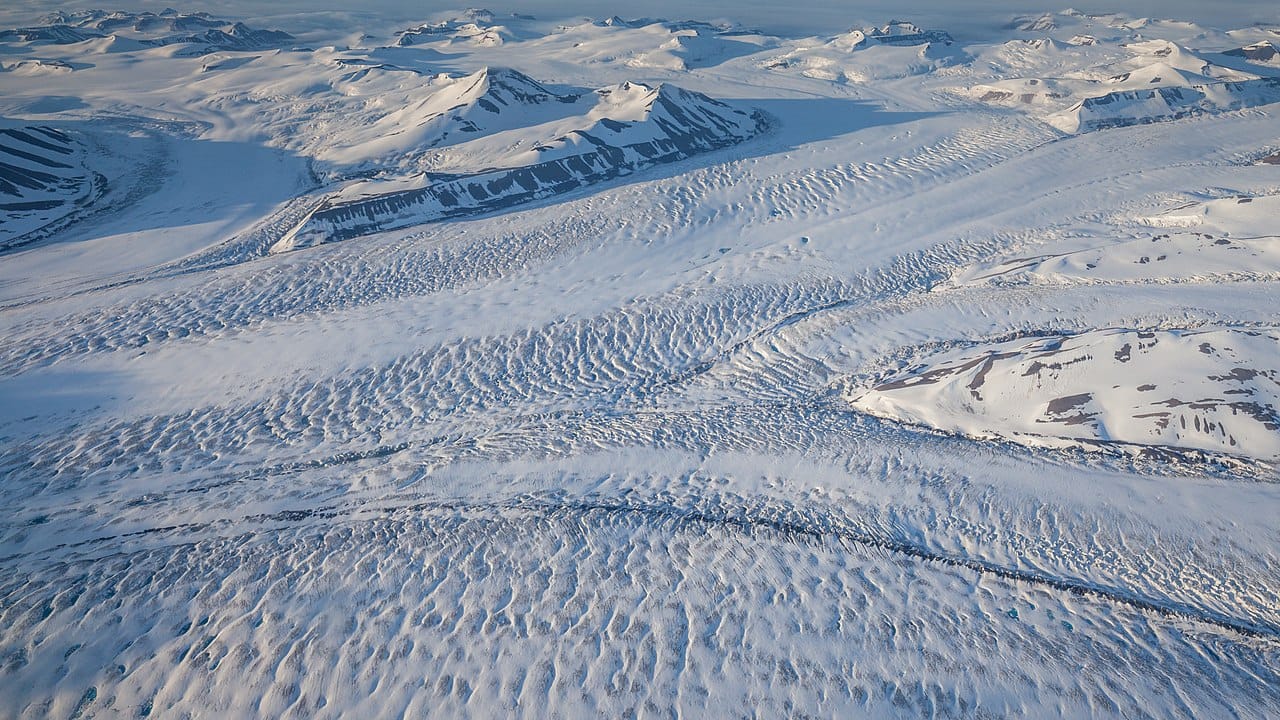
When you look at the map, the Arctic seems close.
A few days north of Scotland.
A short hop from Iceland.
A straight line from Norway.
From the window of a plane, it appears almost domestic — a frozen balcony at the top of Europe. This proximity creates an illusion: that the Arctic is accessible, approachable, perhaps even ordinary. It feels like a place you can visit the way you might visit Greece or Mexico.
But the Arctic is different.
Most of the human presence clings to a few small hotspots. The rest — the overwhelming majority — is off the chart: empty, uninhabited, harsh, and indescribably beautiful. Svalbard alone is the size of a country, yet year after year only a handful of boats venture beyond a few familiar fjords.
It’s this contrast between apparent accessibility and the reality of vast, severe emptiness that draws me in. The Arctic is the place on Earth where the frontier is most obvious. Not the frontier of maps or passages or records, but a frontier of feeling — the boundary between a shrinking world and one that still feels infinite.
We live in a time when most climate stories offer only grief:
Pacific islands drowning under rising seas.
Coral reefs bleaching into white stones.
Forests dissolving into smoke.
But the Arctic is different.
It is a wound that calls for healing.
In some places, the ice is retreating at terrifying speed.
In others, the landscape remains seemingly untouched.
Looking at Jakobshavn Glacier calving into Disko Bay, we feel two truths at once:
This is disappearing.
This is still here.
That duality — that tension — is the silver lining.
Not everything is lost.
Some places still hold awe.
There is purpose in that tension.
The Arctic is different.
It is the only place where the climate crisis, the frontier myth, and the possibility of wonder coexist. It’s a place where we can navigate through ice and silence and feel the present, the past, and the future pressing against the hull at the same time.
I am not going to conquer.
I am going to witness.
I am going to understand.
I am going to listen to the planet that still speaks with clarity.
I am going to experience change.
I am going to take ownership.
I am going to approach places that demand humility.
The Arctic is different.
The emptiness hidden beneath the contrails of the world’s busiest air routes reminds us that life matters when it is rare, and that words carry weight where there is silence.
I am going north to remember.