
Archeology of the Frontier
An ethnography of a changing frontier (Part II)

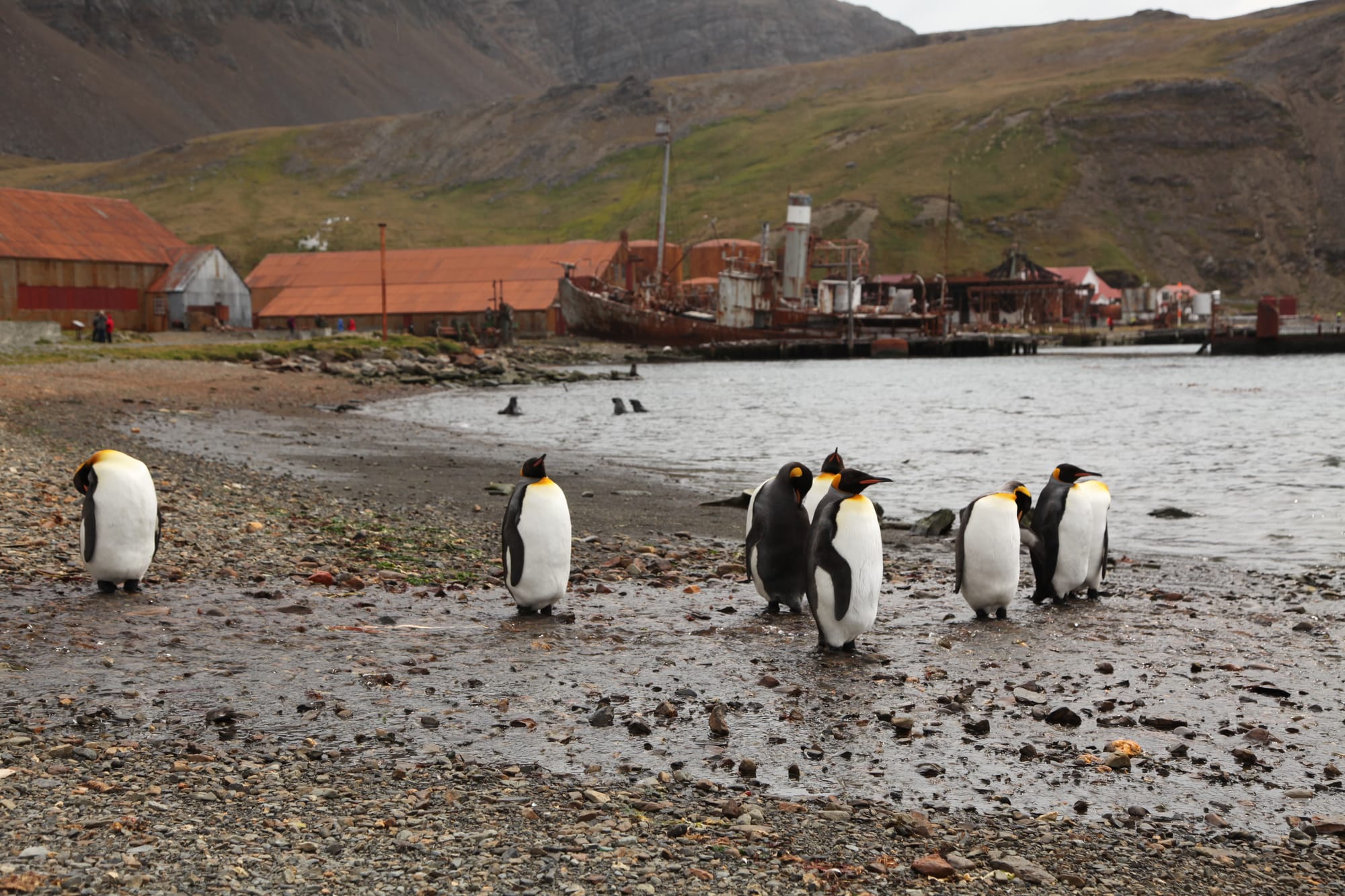
When we think of the polar regions, our attention usually turns to geology and climatology — to ice sheets, glaciers, and temperature curves. The environment dominates the narrative. Yet the environment means little without people. The idea of a Frontier exists only in relation to human presence — to the possibility of inhabiting, crossing, or imagining a place.
In the Western imagination, the Frontier has always represented expansion: the projection of civilization into the unknown. We don’t agonize over the melting ice of distant planets because they remain beyond our imagination; our concern with the poles arises from the fact that they have been within the horizon of human desire for thousands of years.
The Arctic and Antarctic have a rich history. The northern world has been inhabited for millennia by Inuit and other Indigenous peoples. Europeans, too, have been drawn northward for centuries — from the Vikings who settled Iceland, Greenland, and parts of North America to the sailors, trappers, and missionaries who followed. Ancient Greek philosophers hypothesized a great southern continent as early as the 4th century BCE, while other civilizations, like Ancient Egypt, simply did not think about the poles at all.
Western civilization developed around the myth of a Frontier and the aspiration to push it farther. Alexander the Great, the Roman Empire, and later the American West are among the most memorable expressions of that drive to expand. Nothing illustrates the Frontier better than Hadrian’s Wall — the northern boundary of the Roman Empire in Britain. It was not only a defensive barrier but also a psychological one: the limit of Rome’s ambition in the north.
The space beyond the Frontier is generally regarded as uninhabited, not because it lacks human presence, but because it lies beyond the imagination and understanding of Western civilization. This myth of the uninhabited frontier, central to the story of polar exploration, is an expression of ignorance — ignorance of geography, climatology, and history.
As explorers of the twenty-first century, we must approach today’s Frontier historically — as an ongoing archaeology of human adaptation. What did it mean for the Vikings to call an ice-covered island a “green land”? What was it like to spend a winter in a whaling station or a remote mining camp? Knowledge, understanding, and imagination form the strata beneath our own experience of the Frontier.
Seen through this lens, the Arctic is not a static stage for tragedy or triumph but a landscape in constant metamorphosis. Hunger no longer defines survival, but alcohol and suicide devastate Indigenous communities. Dog sleds and harpoons have given way to snowmobiles and rifles; whaling stations have vanished, allowing wildlife to return and transforming prey into spectacle. Mining towns stand deserted while new oil fields are surveyed. A region once militarized during the Cold War is now largely demilitarized. Explorers of the land traveling on skis have become scientists collecting data by snowmobile and helicopter.
There is no single story, no simple moral. The Arctic has always been changing, and so have we. To study its past is not to mourn what was lost but to recognize how each generation redefines what the Frontier means to them.