Adak: Video Tour
Just before leaving Opua, I filmed a tour of Adak while she was still empty and legible. The refit was finished, the interior had not yet disappeared beneath daily life, and it felt important to record the boat before we moved aboard.

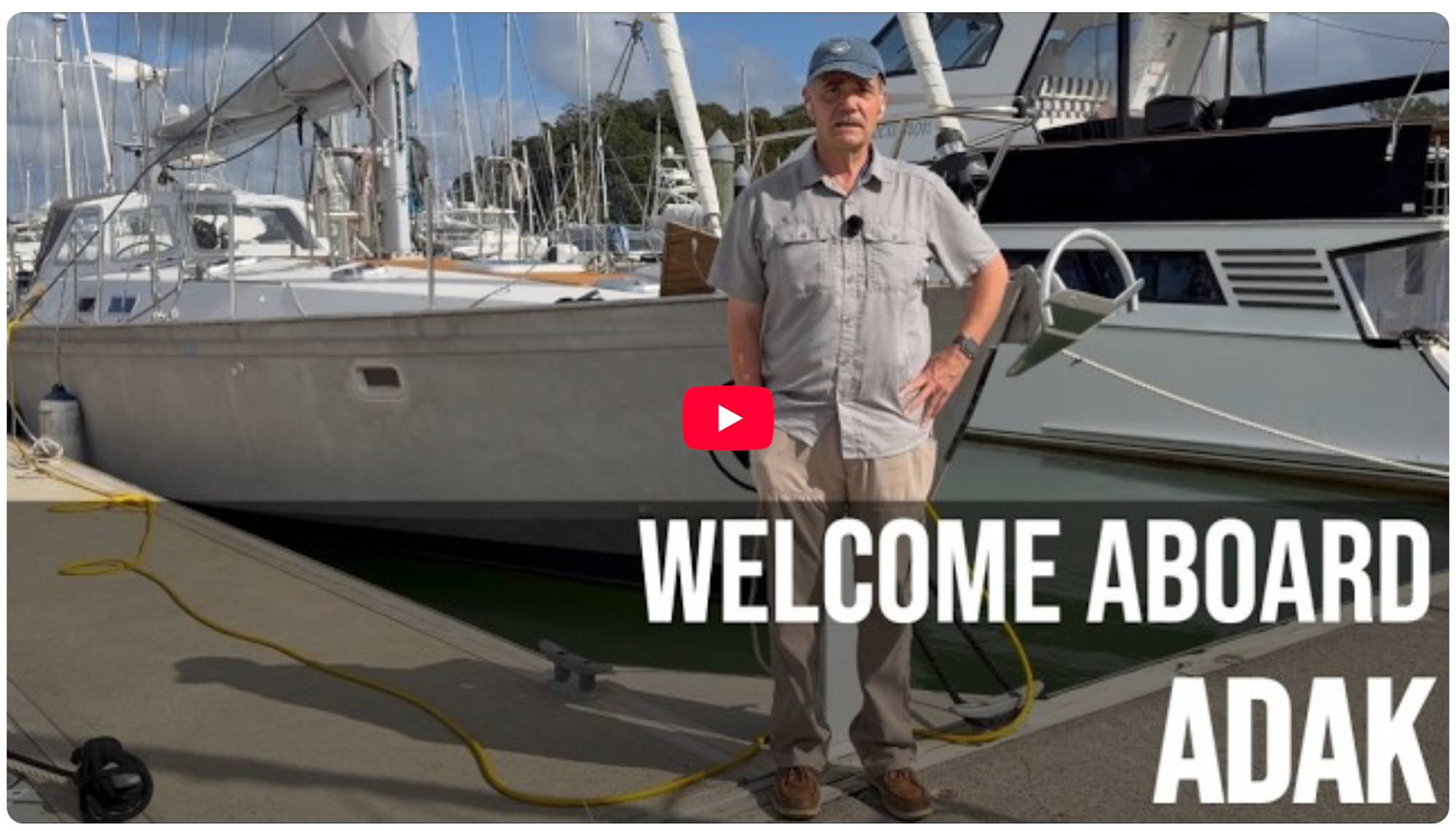
Before we left Opua, I took some footage of the boat. It was like a ritual to celebrate the end of the boat preparation. She was finally ready, the interior was empty and legible for the last time, and it seemed like the right moment to walk through it before we moved in and made it ours.
A record, a milestone, more than a statement.
She was known as Rosemary when I bought her in Opua. I changed her name to Adak when I registered her — that's a story for another post.
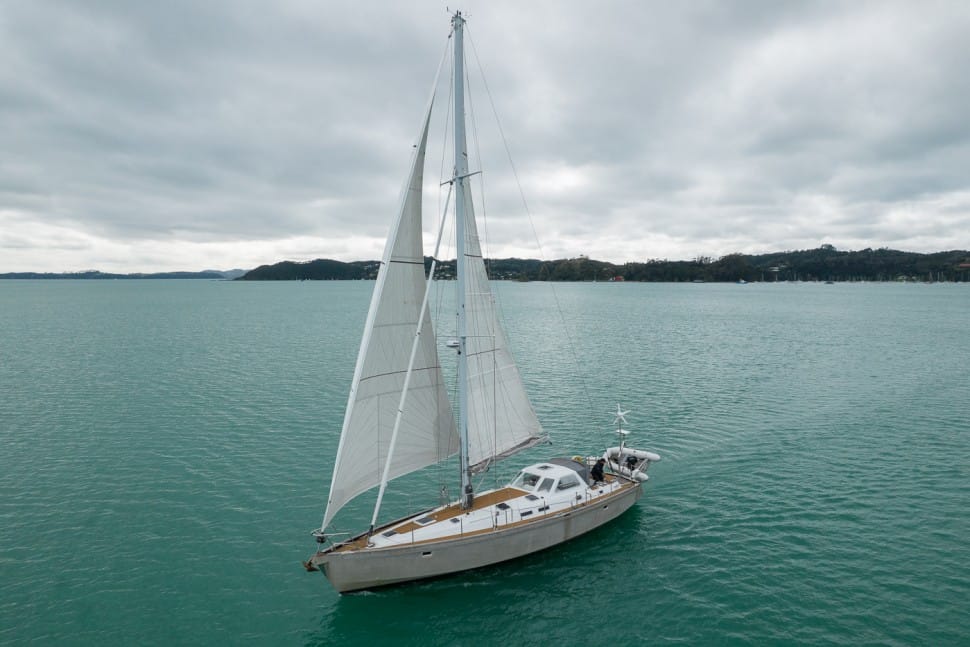
The exterior first. Adak has incredibly clean lines for a 28-year-old aluminum boat. Most expedition boats show their age in their hull. Every rock, dock, piece of ice they hit leaves a scar, a dent, or a deformation of the plates between frames. Adak's hull is as clean as when she left the META shipyard. She's built from 11mm aluminum all around — a go-anywhere kind of boat. And she's been places, including Greenland. Her pristine hull is no indication of low use or neglect. It's an indication of her strength.
I branded the boat with the Ice Frontiers logo on the bow and the stern, and the project web address on the boom. That's a way for her to say to whoever looks at her beautiful lines: I am not a lifestyle boat. Check it out. This proved to be a great icebreaker that initiated many conversations. I also have business cards onboard that I distribute to whoever wants to know more about the project. I have never used as many business cards in my life. I walk marinas like I am at a trade show or a scientific conference, but this builds a community. It really does.
Inside, I talk about what it takes to make a boat feel like home. The galley utensils, which I refreshed so I could plan menus before planning passages — because the food matters, and the rhythm of a passage matters, and those two things are not unrelated. The bedding, which I standardized, though I underestimated what triangular berths do to square sheets. And the Refleks stove, which is a piece of technology so simple and so well-made that when it fired up after years of not being used, something shifted. That moment — flame on the first try — is when the boat started earning my trust.
Then I move to the sail locker.
The sail locker felt like a place I could domesticate. That is until I found a spare propeller. Everyone told me it was great to have a spare prop, just in case I lose mine. I did not know that losing the prop was an option I should prepare for. And the idea of changing a propeller in 5°C water in Alaska is terrifying. The presence of this propeller in the sail locker takes me to places I am not emotionally ready to go, yet. I kept it for now. But I feel it's staring at me, wondering if I will ever become the sailor who hopes that someday they have the opportunity to demonstrate how great it is to have a spare prop — and incidentally, what a great sailor they are to be able to use it.
The engine room feels more accessible because there's a ladder to go down. But the illusion is short-lived. It takes only a few seconds to realize this is a different world down there, and I just can't fake it, it's not my world. I am slowly learning to identify the different systems, a mental representation is slowly emerging. The simpler ones start to feel approachable. The engine itself does not. It's intimidating. It feels like a troll that made the boat its home well before I acquired her. I considered various rituals to beg for its mercy. A small altar with candles did not sound like a great idea. Checking its fluid levels feels like a peace offering, an act of submission: ask whatever sacrifice you want from me to spare me engine troubles.
I slept well that first night.
Not because I felt ready. I clearly wasn't.
But for the first time since buying the boat, the list of tasks had become shorter than the list of things that actually worked. The refit was over. The preparation phase was ending. Whatever happened next would happen at sea.
That was Opua, almost a month ago.
Since then we have sailed more than 2,000 nautical miles. This post was written near the equator and the video edited somewhere south of Kiribati — roughly the middle of the Pacific, assuming an ocean that large can still be said to have a center.
Many of the things that felt intimidating during that tour now feel ordinary. The The water maker has become part of daily life. The galley works. The sail locker no longer feels mysterious. The engine still inspires a healthy degree of respect, but less superstition.
The boat has taken us here — or we have taken it, the causality is genuinely unclear at this point.
Either way, the relationship has changed.
This video captures the moment just before that happened.
Related Posts
 Jean Peccoud
 Jean Peccoud
 Jean Peccoud